


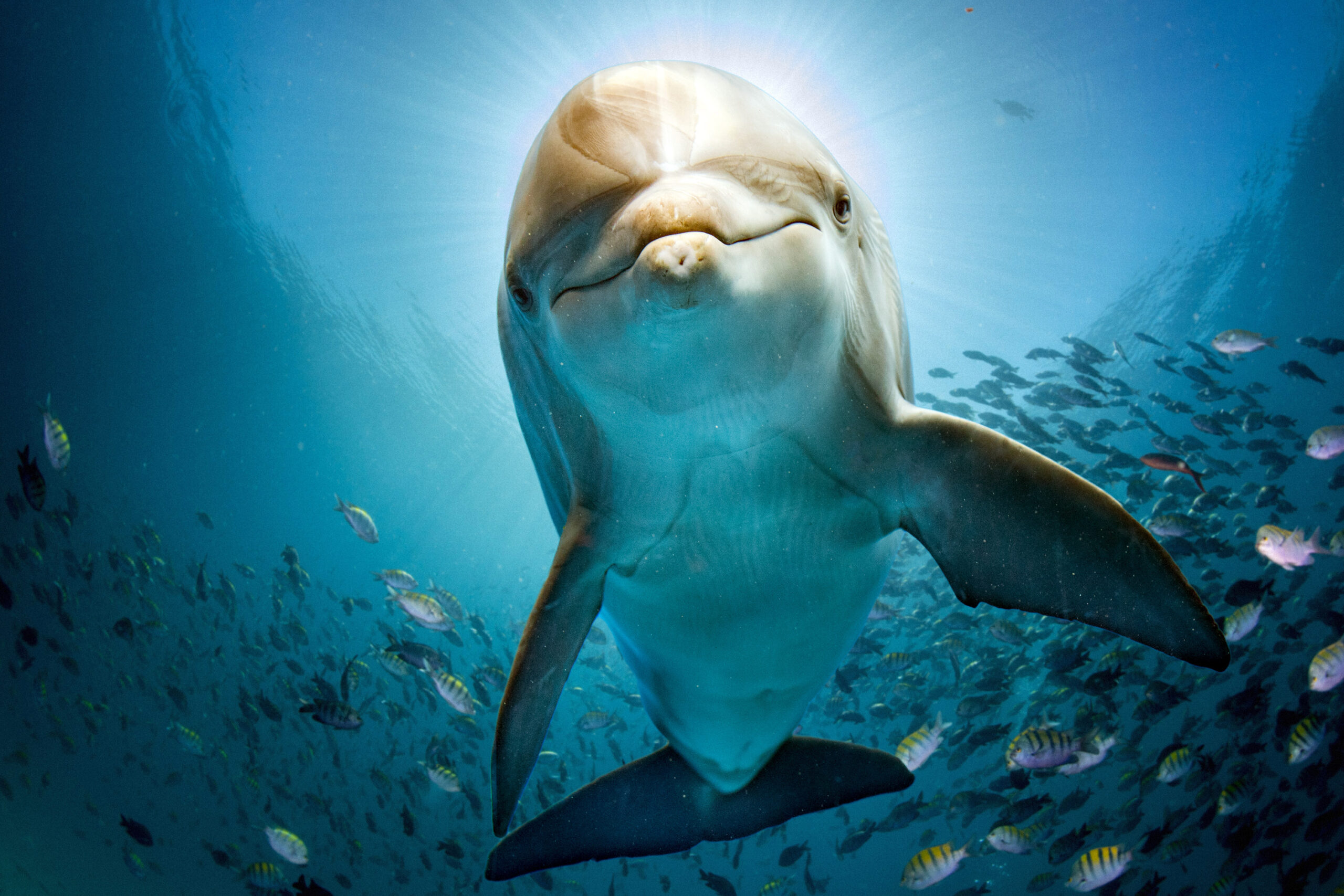
Dolphins are among the world’s most beloved animals, admired for their intelligence, grace and playful charm. Few things match the thrill of spotting a pod of dolphins gliding effortlessly through crystal-clear waters or leaping exuberantly into the air.
If you’re lucky, when you’re offshore in Antigua & Barbuda, you may spot one or more of these incredible creatures chasing alongside your boat in the warm, azure waters of the Caribbean. The islands are home to a variety of dolphin species, including the bottlenose dolphin, spinner dolphin, and the occasional spotted dolphin. Bottlenose dolphins are perhaps the most well-known and recognised for their charismatic smiles and complex social behaviours. Spinners, on the other hand, are renowned for their acrobatic displays, often launching into spiralling leaps above the waves. These species not only delight locals and visitors alike but also play an integral role in maintaining the health and balance of the region’s marine ecosystems.
Dolphins are truly global creatures, with 42 recognised species inhabiting the oceans and even some rivers of the world. They range in size from the small and elusive Hector’s dolphin to the majestic orca, which, despite its “killer whale” moniker, is actually the largest dolphin species. This incredible diversity makes them one of the most fascinating marine mammals to study.
There is no doubt that dolphins are incredible animals, and their intelligence is nothing short of astonishing. Scientists have studied their behaviours extensively, revealing advanced problem-solving skills, self-awareness, and even the ability to use tools. In one fascinating example, bottlenose dolphins in Australia have been observed covering their snouts with sponges to protect themselves while foraging along the ocean floor – a remarkable demonstration of tool use. Dolphins are also known to identify themselves with unique “signature” whistles – essentially names – that help them communicate within their pods. When one hears its own whistle, it often sounds it back as an acknowledgement. This individual identity is extremely rare in the animal kingdom and underscores their advanced cognitive abilities.
There is no doubt that dolphins are incredible animals, and their intelligence is nothing short of astonishing.
Another extraordinary feature of dolphins is their use of echolocation – a natural sonar system that allows them to navigate and hunt with astounding precision. By emitting high-frequency clicks and listening for the echoes that bounce off objects, dolphins can create detailed mental maps of their surroundings. This skill is so refined that they can distinguish between different species of fish or detect an object as small as a coin from metres away, even in murky or dark waters. Their clicks vary in pitch and frequency depending on the task at hand, showcasing their adaptability and unmatched ability to thrive in diverse environments. This acoustic mastery is particularly valuable in the deep ocean, where sunlight doesn’t penetrate. It not only helps dolphins find prey but also avoid predators and obstacles.
Another fascinating aspect of dolphins is their empathy and altruism. Tales of dolphins rescuing humans or other animals in distress are not uncommon. For example, in 2004, a pod of dolphins in New Zealand famously protected a group of swimmers from a great white shark by circling them until the threat passed. Such stories highlight their remarkable instincts and willingness to assist others, even across species. Their cooperative hunting strategies also reveal a level of teamwork that rivals even human efforts. Watching a group of dolphins herd fish into tight formations, taking turns to feed, is a veritable masterclass in coordination and communication.
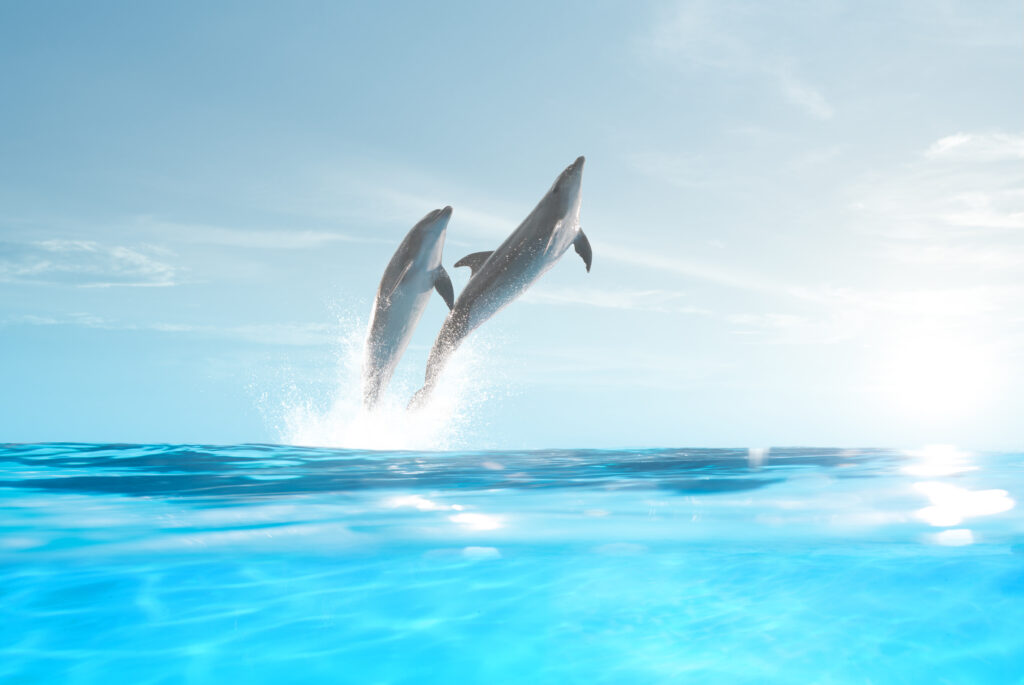
However, their lives are not all playful leaps and synchronised swims. Dolphins have complex social structures that include hierarchies, alliances, and even lifelong friendships. Within a pod, individuals often display affectionate behaviours such as rubbing, nudging, and vocalising, suggesting strong bonds and emotional depth. Their playful antics, such as riding waves or tossing objects, might seem like pure fun, but they are also believed to be a form of learning or practice for survival skills. And, despite their “cuddly” persona and our tendency to anthropomorphise them, it’s important to remember that dolphins are wild animals with complex social dynamics. Beneath their playful image, they can be aggressive, with behaviours like biting and bullying often linked to dominance or competition. This reminds us that while we may project human traits onto them, they live by the rules of nature.
The wonder of dolphins doesn’t end there. They play a vital role in maintaining the balance of the ocean’s ecosystem. As apex predators, they help control fish populations, ensuring no single species dominates and disrupts the delicate marine environment. Consequently, their presence is a sign of a healthy ocean, and protecting them is crucial to safeguarding the broader marine world.
They (dolphins) play a vital role in maintaining the balance of the ocean’s ecosystem.
Despite their incredible abilities and the joy they bring, dolphins face many threats. Overfishing, pollution, and habitat destruction have significantly impacted their populations worldwide. In some places, they are still hunted for their meat or captured for entertainment purposes. Seeing a dolphin performing tricks in an aquarium may seem fun, but it masks the harsh reality of their confinement and suffering. Dolphins are meant to roam vast stretches of the ocean, not languishing in a tank and swimming in endless circles for human entertainment. By refusing to support these shows, we can take a stand and help keep these magnificent creatures where they truly belong – free in the wild.
Dolphins are not just ambassadors of the ocean; they are reminders of the vast, interconnected ecosystems that sustain life on Earth. By protecting them, we are not only safeguarding a species but also preserving a piece of the natural world.
Dolphins are not just ambassadors of the ocean; they are reminders of the vast, interconnected ecosystems that sustain life on Earth. By protecting them, we are not only safeguarding a species but also preserving a piece of the natural world.
Protecting dolphins in the wild isn’t just about saying no to captivity – it’s also about awareness and respect, even when their name pops up unexpectedly on the menu. Indeed, when in Antigua & Barbuda, if you find yourself scanning a menu and spotting “dolphin” listed among the day’s specials, don’t be shocked; this doesn’t mean Flipper has been repurposed as the catch of the day! Instead, you’ll be treated to mahi mahi or dolphin fish, a wholly unrelated and delicious species. Thankfully, the dolphins that we love so much are strictly protected in these waters.
In the twin islands, conservation efforts focus on protecting these marine mammals and ensuring their habitats remain pristine. Dolphins are protected under local laws, and initiatives to educate the public and tourists about their importance to the aquatic ecosystem are ongoing. Encounters with dolphins in the wild, such as those offered by eco-tour operators, are carefully managed to minimise disturbance and promote appreciation for these extraordinary animals.
Seeing a dolphin in its natural environment is an experience that stays with you – a moment of pure connection to the wild. Protecting these incredible creatures ensures future generations can experience this same awe. Let’s keep them there.
Interesting facts about dolphins:
- Dolphins can communicate across distances of over 15 miles (about 24 km) using high-frequency clicks.
- The orca, or killer whale, is the largest dolphin species.
- Bottlenose dolphins can live up to 60 years in the wild. In captivity, only 28 years.
- Dolphins can reach speeds of up to 37 mph (60 km/h) when swimming.
- The rare pink river dolphin lives in the Amazon.
- Dolphins are among the few animals that can recognise themselves in mirrors, indicating self-awareness.
- Dolphins can dive to depths of over 1,000 ft (about 300 meters) and hold their breath for up to ten minutes.
- Dolphin pods can range from a few individuals to superpods of 100 or even thousands of dolphins.
- Some dolphins use their tails to stun fish, making it easier to catch their prey.
Dolphins shut down one brain hemisphere and close the opposite eye while sleeping, allowing them to stay alert and regulate breathing.