


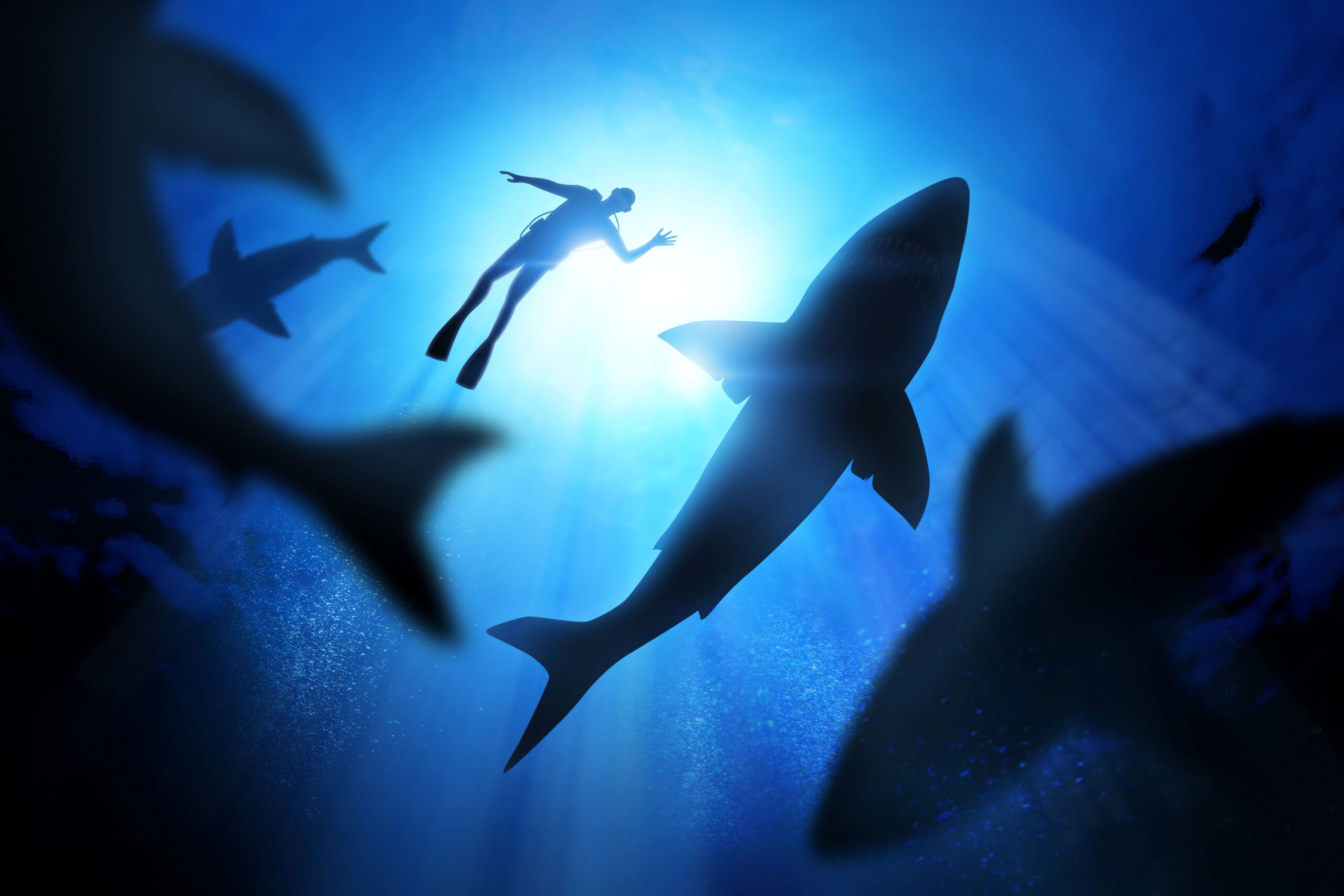
Among the myriad creatures inhabiting our planet, none elicits so much fear and fascination as the shark. And ever since the iconic film Jaws sent shivers down our spines in 1975, one of man’s biggest fears is what may lurk in the deep. As a consequence, these majestic predators have been unfairly vilified and misunderstood. However, as our knowledge deepens and awareness grows, it becomes increasingly evident that sharks are not the monsters depicted in movies. Indeed, beyond their invaluable role in the ocean ecosystem, the majority of sharks pose no threat to humans.
Sharks have survived five mass extinctions, including the one that led to the dinosaurs’ demise 65 million years ago. Regrettably, in this fleeting moment in the planet’s history, sharks are facing an unprecedented threat – this time, not from nature but from us. The average of 10 yearly fatalities caused by sharks is merely a drop in the ocean compared to the tragic toll humans are inflicting upon these incredible creatures.
Unfortunately, overfishing and shark finning have caused some shark species’ populations to dwindle by almost 90 percent, with an estimated 70 to 200 million sharks killed annually due to the high demand for shark products, including shark fin soup.
Unfortunately, overfishing and shark finning have caused some shark species’ populations to dwindle by almost 90 percent, with an estimated 70 to 200 million sharks killed annually due to the high demand for shark products, including shark fin soup. Others die tangled in so-called ‘ghost nets’ – fishing nets left or lost in the ocean. Unsurprisingly, recent assessments paint a grim picture: a third of species face the looming threat of extinction.
Unquestionably, sharks are extraordinary creatures. With their impressive evolutionary history spanning over 450 million years, they stand as a resilient testament to survival and adaptability. To put this in perspective, sharks predate trees by over 100 million years and dinosaurs by a staggering 200 million years. With a remarkable diversity of over 400 species, sharks inhabit every ocean in the world, and new species are still being discovered every year, especially in the deep, dark depths of the ocean. From the colossal yet gentle 18-metre whale shark to the tiny dwarf lantern shark barely exceeding the length of a human hand, their sizes vary widely. Among these diverse species are intriguing anomalies like the mysterious and aesthetically challenged goblin shark and viper dogfish, the diminutive cookie-cutter shark that takes precise circular bites out of larger prey, leaving them alive, and adaptable species like the bull shark, equally at home in saltwater and freshwater environments.
Shark attacks are extremely rare in the region, with Antigua never having had a shark attack in recorded history.
As the world’s largest known predatory fish and the ‘star’ of Jaws, the great white shark is both the most feared and instantly recognisable amongst its species. But it is that charismatic appeal that makes them the poster boys for marine conservation. These apex predators are considered a vulnerable species, and efforts are being made to protect them. Like most sharks, they play a critical part in regulating marine ecosystems. In their case, ensuring that the populations of seals, sea lions and other marine mammals do not explode, maintaining biodiversity in the ocean around them and cleaning the ocean through their scavenging behaviour.
Although great whites are not found in the Eastern Caribbean, a wide variety of sharks, such as the Caribbean reef, nurse, blacktip, and lemon shark, can be spotted by lucky scuba divers in Antigua & Barbuda’s waters. Shark attacks are extremely rare in the region, with Antigua never having experienced one in recorded history. The Caribbean reef shark is probably the most common shark to be encountered. These generally unaggressive creatures typically reach about 2 or 2.5 metres in length. They are crucial in controlling the number of smaller prey species on the reefs, thereby preventing overgrazing on seagrass and coral. Additionally, they remove unhealthy or weak fish from the population. Once more, the indispensable role of sharks in marine ecosystems cannot be overstated; their absence could lead to collapse and devastation.
Hunting and overfishing aren’t the only threats sharks face. The destruction of their habitats, such as reefs and mangrove forests, coupled with changing ocean temperatures due to climate change, is exacerbating their challenges.
And although there are increasing global efforts to protect these ancient creatures, such as the Convention on International Trade in Endangered Species of Wild Fauna and Flora, the establishment of marine protected areas (MPAs), sustainable shark tourism, and legislation against shark fin products, many conservationists don’t consider that it goes far enough. But while protection orders offer a lifeline to sharks, they aren’t a swift solution. The root of their vulnerability lies in their slow reproductive rates. Sharks take considerable time to mature, have few offspring and a long gestation period.
As people increasingly believe seeing a shark as a privilege rather than a curse and continue learning more about their vital role in the world’s oceans, we must shift our perspective from fear to appreciation and conservation.
As people increasingly believe seeing a shark as a privilege rather than a curse and continue learning more about their vital role in the world’s oceans, we must shift our perspective from fear to appreciation and conservation. The existing global initiatives are steps in the right direction, but additional efforts are needed to protect these ancient and magnificent species for generations to come. Education is pivotal in this endeavour, as it fosters awareness and understanding of sharks, encouraging responsible behaviours and advocating for their conservation. Sharks are not the monsters of our nightmares; they are the guardians of our oceans, and it is our responsibility to ensure their survival.
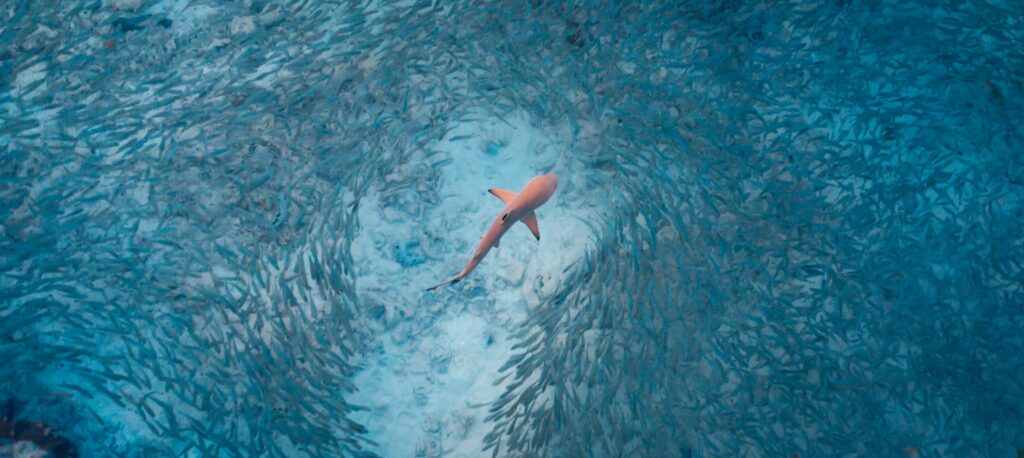
Some shark facts and figures
Sharks have been around for over 450 million years.
International hunting bans only exist for the whale, basking, and great white sharks.
Antigua & Barbuda has implemented measures like the Antigua & Barbuda Sharks National Plan of Action (NPOA) to safeguard these creatures.
70 to 200 million sharks are killed annually due to the high demand for shark products.
The yearly global average of fatalities caused by sharks is only 10.
97 percent of all sharks are harmless to humans, and 95 percent of attacks (even from great white sharks) are non-fatal.
Some sharks lay eggs; some have live young. Their gestation period lasts five months to two years.
The whale shark can take up to 30 years to reach maturity and start breeding. The Greenland shark can take up to 150 years.
Female sharks can occasionally reproduce without male fertilisation, called parthenogenesis.
The Caribbean hosts around 50 species of sharks.
The mako is the fastest shark and can swim in bursts of up to 68-70 kilometres per hour.
Most species live between 20 and 30 years, although the Greenland shark is thought to live between 250 and 500 years.
Sharks continually shed and replace their teeth, with some species losing up to 35,000 teeth in their lifetime!
Great whites can smell blood from five kilometres away.
Shark skin has tiny teeth called placoid scales or dermal denticles, reducing friction as they swim and giving the skin a sandpaper-like feel.
A shark can go into a trance-like state (tonic immobility) by flipping the animal upside down.
Hammerhead sharks have 360-degree vision thanks to the positioning of their eyes.
Bull sharks sometimes travelled over 1,000 miles up the Mississippi River until dams and locks prevented it.