


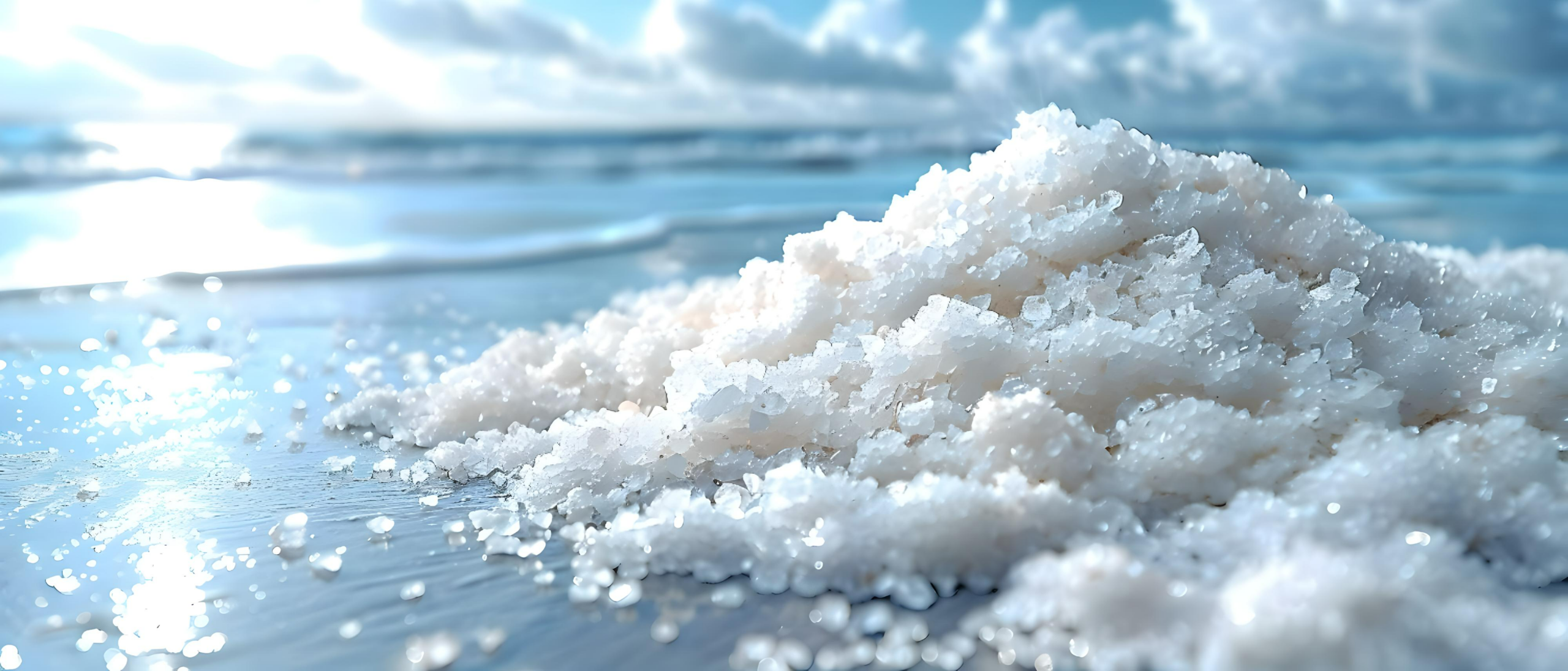
Vast and still, the salt ponds of Barbuda shimmer in the sunlight: quiet and gleaming, set against a backdrop of mangroves and coastal scrub. But these serene, shallow waters once played an important role in the island’s economy, long before tourism and luxury developments emerged on this beautiful isle. Salt, after all, has always mattered more than most give it credit for. So much so that the word “salary” comes from the Latin salarium, a payment made in salt. Wars have been fought over it, empires built on it, and in Barbuda, entire communities shaped by it.
There is something timeless about the salt ponds. Even as Barbuda navigates its future, balancing development with conservation and identity with change, these glimmering flats remain a link to the past.
The story begins in Codrington Lagoon, a vast stretch of water flanked by the island’s western coastline. It is a place of quiet beauty, but also one of historical weight. The lagoon’s natural conditions, including shallow basins, strong sun, and steady sea breezes, made it ideal for salt production. In the late 17th century, Barbuda was leased by the British Crown to the Codrington family, a powerful and wealthy dynasty who used the island primarily to supply provisions for their sugar plantations in Antigua. They never established sugar estates on Barbuda. Instead, they exploited its natural resources, including crops, livestock and salt.
Under their control, salt harvesting became a key part of Barbuda’s role in regional provisioning. The salt collected from the ponds was mainly used to supply the Codringtons’ Antiguan estates, where it helped preserve meat and fish. The Codringtons operated the island with little oversight, and Barbuda essentially became a private estate, worked by enslaved Africans whose labour sustained the Codringtons’ profits.
In the past, salt was not just a seasoning. It was a necessity. It kept meat from spoiling, fish from rotting, and food fresh during long sea voyages. Barbuda’s output may have been modest, but it was vital to the function of sugar plantation life in Antigua and to the island’s self-sufficiency.
In the past, salt was not just a seasoning. It was a necessity. It kept meat from spoiling, fish from rotting, and food fresh during long sea voyages.
Long after slavery was abolished, salt harvesting continued for many years. It became part of everyday life on the island, used to cure fish, season food and store provisions through leaner times. While large-scale production eventually faded, salt remained an important resource for many Barbudan families, remembered today through stories passed down across generations.
But, as with so many traditional practices, change crept in. By the mid-20th century, globalisation and refrigeration made large-scale salt harvesting less necessary. Imports were cheaper. Hurricanes periodically flooded the ponds or changed the delicate balance of evaporation. What remains today is a handful of subtle traces from the past: the gentle curves of salt flats visible in the lagoon, and more importantly, the collective memory held in local stories and traditions passed down through generations.
And yet, the salt ponds never stopped being remarkable. In 2005, Codrington Lagoon and its surrounding wetlands were designated a Ramsar site, in recognition of their international importance as a wetland ecosystem. While the salt ponds lie still and largely unused, the wider lagoon is teeming with life. Most famously, it is home to the largest colony of magnificent frigate birds in the Western Hemisphere. With their enormous wingspans and red throat pouches, the birds are a dramatic sight and a reminder that Barbuda’s natural heritage continues to flourish.
There is something timeless about the salt ponds. Even as Barbuda navigates its future, balancing development with conservation and identity with change, these glimmering flats remain a link to the past. They whisper of labour and resilience, of islanders who raked white gold from the earth with their bare hands, and of a natural system that continues to give, even without the industry that once defined it.
While salt harvesting is no longer part of daily life, the ponds still hold their place in the island’s story. Occasionally, locals may collect small batches, sometimes for personal use, sometimes for sale as artisanal salt when available. It is not a large-scale enterprise, but rather a quiet continuation of tradition. The knowledge has not vanished. It waits, like the ponds themselves, for the right season.
Today, the salt ponds remain a quiet part of Barbuda’s landscape – not forgotten, but no longer central. They are reminders of how people lived, worked, and adapted over generations. Though the industry has faded, they remain part of the island’s history. The ponds, like the stories that surround them, are part of the island’s rhythm – steady, enduring, and uniquely Barbudan.