


Why sea urchins matter to Caribbean coral reefs
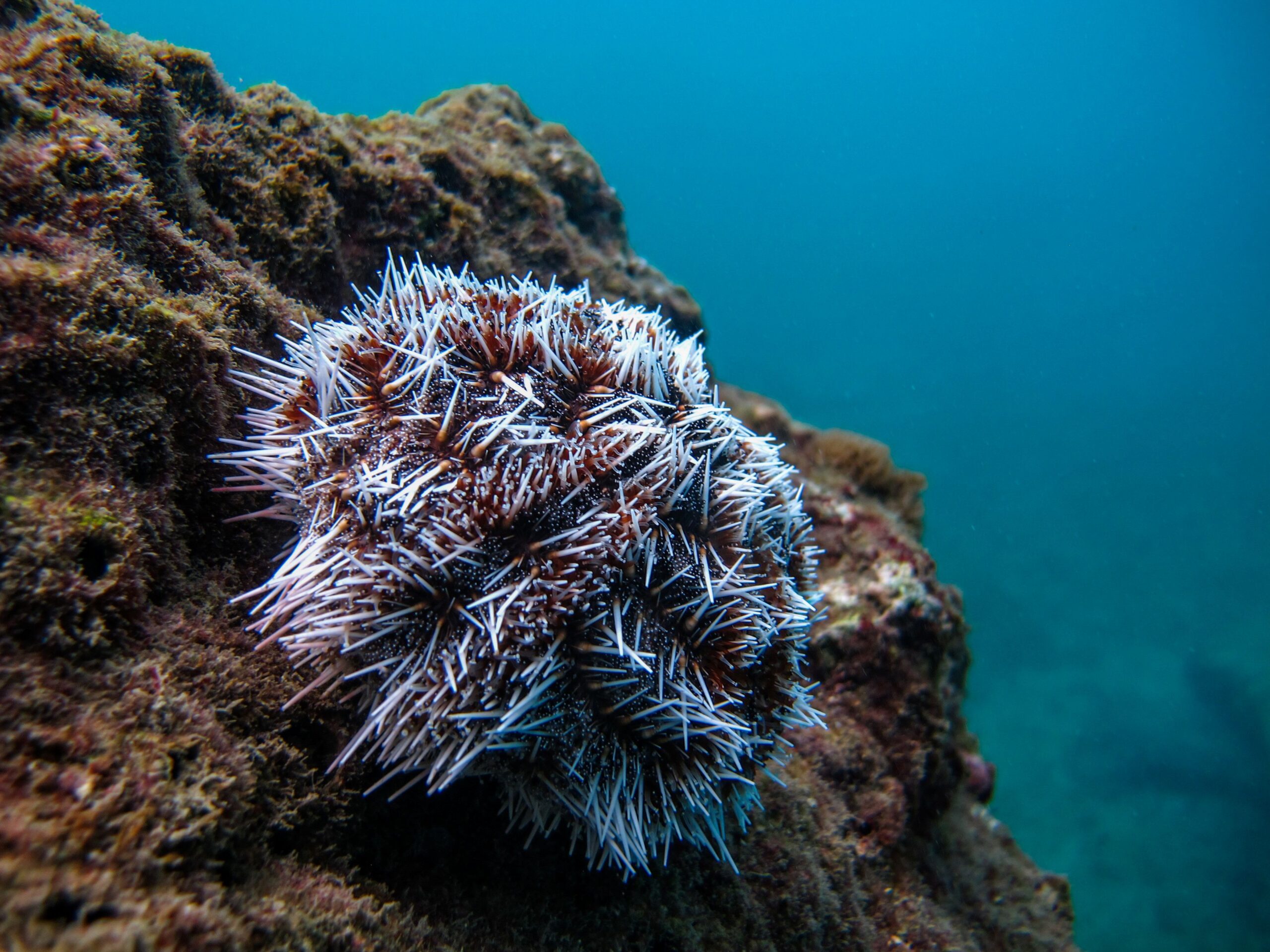
Sometimes when you are snorkelling over a coral reef or seagrass beds, you may notice what appear to be pincushions of various colours scattered across the seafloor. Beneath those sharp defences, however, lies one of the most important and often overlooked players in maintaining the health of Caribbean coral reefs.
Sea urchins are marine invertebrates, meaning they have no backbone, and belong to a group called echinoderms, alongside other marine animals like sea stars and sea cucumbers. Their bodies are covered in movable spines used for both protection and movement across the seabed. On their underside sits a remarkable feeding structure known as Aristotle’s lantern, a complex arrangement of teeth perfectly designed for scraping algae off hard surfaces.
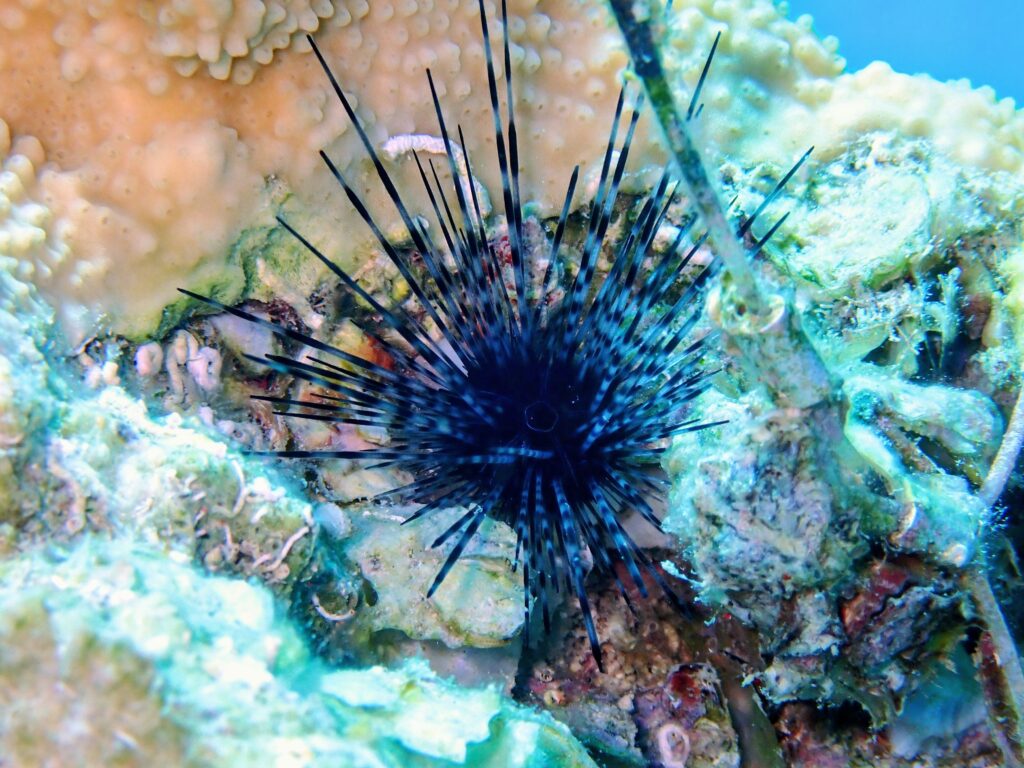
And that scraping? That’s where the magic happens. Coral reefs are formed by tiny animals called polyps, which live in colonies and build the structures that define these ecosystems. Yet corals are in constant competition with algae. If left unchecked, algae can grow rapidly, poisoning and smothering corals, blocking sunlight and preventing new coral recruits from settling. Sea urchins, particularly the long-spined sea urchin, are the reef’s natural lawnmowers, grazing on algae and clearing surfaces, allowing coral to establish and grow.
In doing so, they keep reef surfaces clean, prevent algal overgrowth and maintain the delicate balance between coral and algae that underpins reef resilience. Without sufficient herbivory, the natural grazing of algae by fish and sea urchins, reefs can shift from vibrant coral-dominated systems to algae-dominated ones, a transition that is notoriously difficult to reverse.
Protecting sea urchins isn’t just about conservation. It’s about protecting the future of our reefs, our livelihoods and the identity of the Caribbean itself.
Historically, herbivory on Caribbean reefs was shared among herbivorous fish, including parrotfish and doctorfish, sea urchins and certain crabs. Over time, however, overfishing of species such as parrotfish has reduced the reef’s natural grazers, allowing algae to take hold where coral once thrived. As a result, the ecological burden shifted onto sea urchins, especially Diadema antillarum, whose high grazing pressure has helped reefs remain in a functional, if increasingly fragile, state, despite mounting pressures from hurricanes, pollution and coastal development.
This balance was dramatically disrupted in the early 1980s, when a fast-spreading disease swept across the Caribbean. Within a year, an estimated 95 to 99 percent of Diadema antillarum had been lost. The consequences were immediate and severe. Algae rapidly overtook reefs, coral recruitment plummeted and reef structure, along with the biodiversity it supports, began to decline. Since then, recovery has been painfully slow. In some areas, Diadema populations have shown signs of returning, but often at densities far below historical levels.
In 2022, history partially repeated itself. A new die-off event affected Diadema populations in parts of the Caribbean, including the Eastern Caribbean. While not as catastrophic as the 1980s event, it served as a stark reminder of the vulnerability of both the species and the ecosystems that depend on it. Today, many reefs remain in a state of imbalance, with insufficient grazing pressure to keep algae in check.
Efforts to support recovery are now underway. Protecting sea urchins is not simply about preserving a single species, but about maintaining the integrity of the wider reef system. Monitoring programmes track population density and distribution, while research initiatives explore methods such as rearing Diadema larvae in laboratory settings and outplanting juvenile urchins onto reefs. Scientists are also working to better understand disease dynamics and resilience. Alongside these efforts, public awareness remains important, with simple messages like “look, but don’t touch” helping to reduce human impact on already stressed populations.
For Antigua & Barbuda, healthy coral reefs are not just ecological assets but economic ones. They support tourism through snorkelling, diving and the beaches that draw visitors from around the world. They underpin fisheries by providing nursery habitats and contribute to food security. They also act as natural barriers, reducing wave energy and protecting coastlines from erosion.
Sea urchins, though small, play a disproportionately large role in maintaining these services. In a time of increasing pressure, from climate change and coral bleaching to coastal development, every component of the reef system matters. And sometimes, the smallest creatures carry the greatest weight.
It’s easy to overlook sea urchins or view them as something to avoid. But the next time you’re exploring Antigua & Barbuda’s waters, take a moment to appreciate them. The clear waters and vibrant reefs that attract visitors to Antigua & Barbuda depend heavily on these small but powerful grazers. Each urchin you see is quietly working through grazing, clearing, and maintaining the delicate balance that allows coral reefs to survive. Protecting them isn’t just about conservation. It’s about protecting the future of our reefs, our livelihoods and the identity of the Caribbean itself.
SEA URCHINS IN THE CARIBBEAN
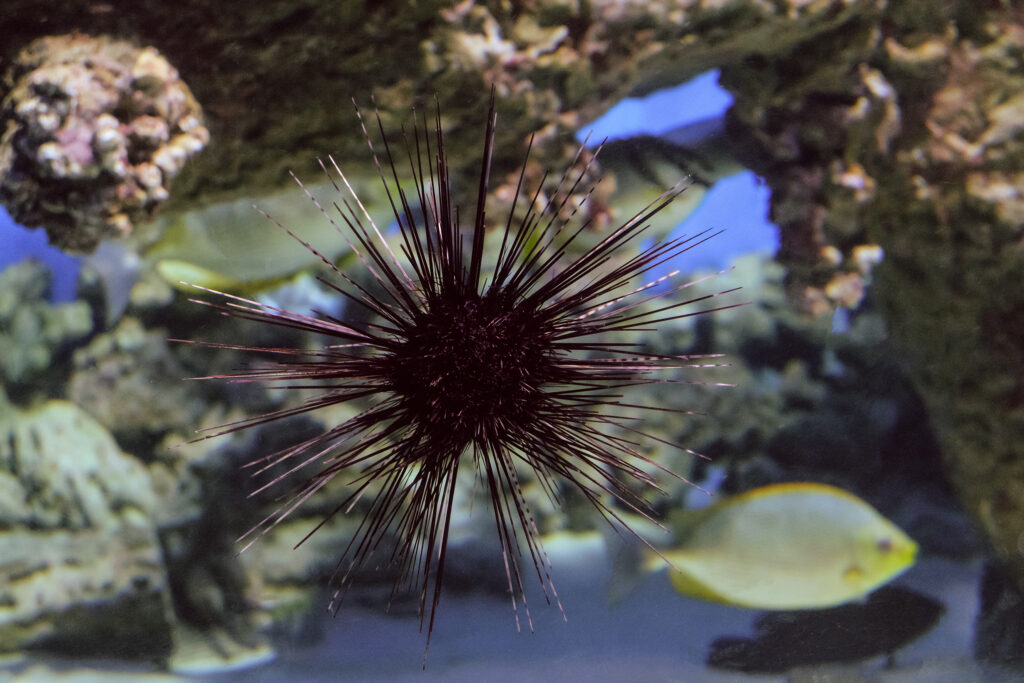
- The long-spined sea urchin (Diadema antillarum) is the most important grazer on Caribbean reefs, easily recognised by its long, slender black spines.
- The white sea egg (Tripneustes ventricosus) is rounder with shorter spines and is commonly found in seagrass beds. It is also a traditional delicacy in parts of the Caribbean, including Antigua & Barbuda, where harvesting is regulated.
- Rock-boring urchins (Echinometra species) are smaller but powerful, carving into reef rock and contributing to habitat complexity.
- Other species found across the region include pencil urchins (Eucidaris tribuloides), variegated urchins (Lytechinus variegatus) and the red heart urchin (Meoma ventricosa).
WHAT TO DO IF YOU ENCOUNTER A SEA URCHIN
Sea urchins are not aggressive, but their spines can cause injury if stepped on. Give them space and avoid touching or handling them and watch your footing in shallow reef areas. If you are stung, remove any visible spines carefully, soak the area in hot (not scalding) water and clean the wound. Stay calm, as most stings are not dangerous. Seek medical attention if pain becomes severe, the spines are deeply embedded or signs of infection appear. For divers and snorkelers, proper footwear and good buoyancy are your best defences.

Ruleo Camacho
Is a marine ecologist from Antigua & Barbuda specialising in coral reef conservation and restoration. With over a decade of regional experience, he works as a consultant with the National Parks Authority and other agencies, and is pursuing PhD research on coral resilience, helping shape sustainable marine management in a changing Caribbean.