


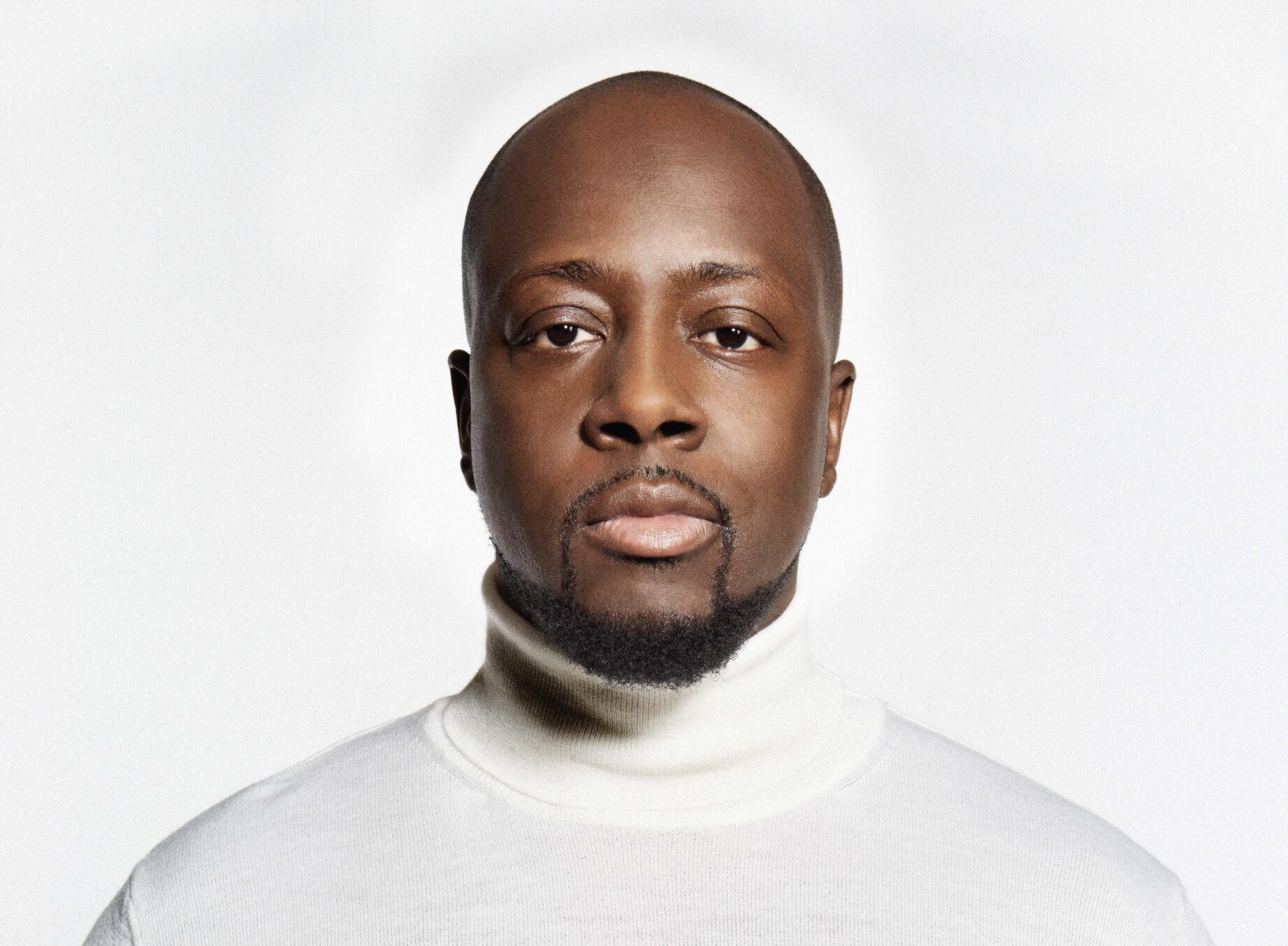
Wyclef Jean is a Haitian rapper, singer, songwriter and actor. He emigrated with his family to the United States at the age of ten and exploded onto the scene as a member of legendary hip hop group the Fugees alongside Lauryn Hill and Pras Michel. Their award-winning album, The Score, released 25 years ago, became one of the best-selling albums of all time. Wyclef’s solo career has continued to flourish, as has his philanthropic work. And as well as producing and releasing his own music and eight studio albums, he has produced the work of musicians such as Michael Jackson, Mick Jagger, Whitney Houston and Destiny’s Child. Wyclef is a regular visitor to the shores of the twin islands where The Citizen caught up with this multi-talented artist to find out about his background and where his love of music came from.
How important is your Caribbean background to you?
I always say that the best part about the US is the cultural experience, the idea that people come from different places but still share something. And those from the Caribbean come from a very unique space. So, what is it about the Caribbean people that is different from the Black community in America? We’re not going to say we’re from enslaved people because we are all from slaves. But we Caribbeans have a very natural spiritual gift in that our African ancestral roots are deeply embedded in us.
“But we Caribbeans have a very natural spiritual gift in that our African ancestral roots are deeply embedded in us.”
When did you start being interested in music?
Music has shaped me as a person. I came from Haiti at the age of 10 without speaking a word of English. We lived in Brooklyn, where my father was a minister, and so at a young age I was thrown into the pool of worshipping, music and singing. I am a “gospel kid” like Aretha Franklin and Marvin Gaye.
How did you become a musician?
I feel I need to tell this story as sometimes kids only see someone’s success, not the long journey it took to get there. When I was a kid, I fell in love with the idea of music, and I decided to learn everything about it on my own. So by 15 or 16 years old, I could play around ten different instruments – all self-taught.
My parents decided to move us to New Jersey for a better life, and I started at a new school. One day, I was in the auditorium playing the piano, and Valerie Price, my music teacher, walked in. I always make sure to credit her as she did so much for me. She asked me – keep in mind, this isn’t a private school, but one in the middle of the project community – how I’d learned the piano. I told her I could simply hear it in my head and, when I closed my eyes, I could see the numbers one, three and five on my right hand and one and five on my left hand. I still don’t understand what these numbers mean, but when I close my eyes, I see numbers. It is a natural gift, just like Stevie Wonder has; he can tell anyone’s zodiac sign by simply holding them. The teacher told me that I was going to start learning jazz the very next day. My first reaction was that I didn’t want to learn jazz as it was for old people, and I wanted to be a battle rapper like LL Cool J! But she wouldn’t take no for an answer.
I became deep-rooted in Miles Davies and Art Blakey, and by the time I was 17, I was a jazz prodigy. This teacher raised money so we could compete in a jazz competition in Pasadena, and we won it. This is what I want the kids to understand; I wasn’t thinking about when I was going to get a Bentley; I just wanted to be the best at jazz. And this was before I was introduced to pop music or the Fugees.
“When I’m in Antigua, my soul feels at home.”
How did the Fugees come about?
One day Pras called me to tell me he was in the studio with two girls, and he needed me to come and sing a hook. The producer happened to be Khalis Bayyan, Kool’s brother from Kool and the Gang. When I turned up and saw these two beautiful women, Lauryn Hill and Marcy Harriel, I was sold – remember I was a teen then! After singing, Khalis said there was something magical about the four of us playing together. So, we all signed a contract and released the first Fugees album, which was called Blunted on Reality. But it’s important to say that this didn’t happen overnight; we were rehearsing night and day.
Where did the name Fugees come from?
Fugees is short for ‘refugees’ because of the constant overflow caused by political instability. Whether they’re from Cuba or Haiti, refugees get on a boat without really knowing where they are going. My ideology has always been very militant, even as a young kid.
What message would you like to give youth today?
I want them to understand that when creating something, they need to think about whether someone will dig this long after they’re gone. They have to make things timeless. They see the mansions, cars and jewels, and they want all of that. But the reality is that only a very few of us achieve that kind of success, and they need to think about how we got there in the first place. I’m not saying the cars aren’t fly, or the mansions aren’t fly, but people also need to think about whether they are just materialistic or vain or if they really want to stand for something important.
For kids in the Caribbean, I would tell them about the power of Africa. The youth of Africa understood their worth and the power of their music. They didn’t want to compromise on their music, so they called it Afrobeat as they were proud of being African. We need to see more of that in the Caribbean.
There are indeed different, exciting sounds coming out of the Caribbean, such as Raboday music from Haiti where the kids take the root sound of the streets, put electro against it and then rap on it – it’s become their own thing. I want the Caribbean kids to know that their culture is their power, so dig into it.
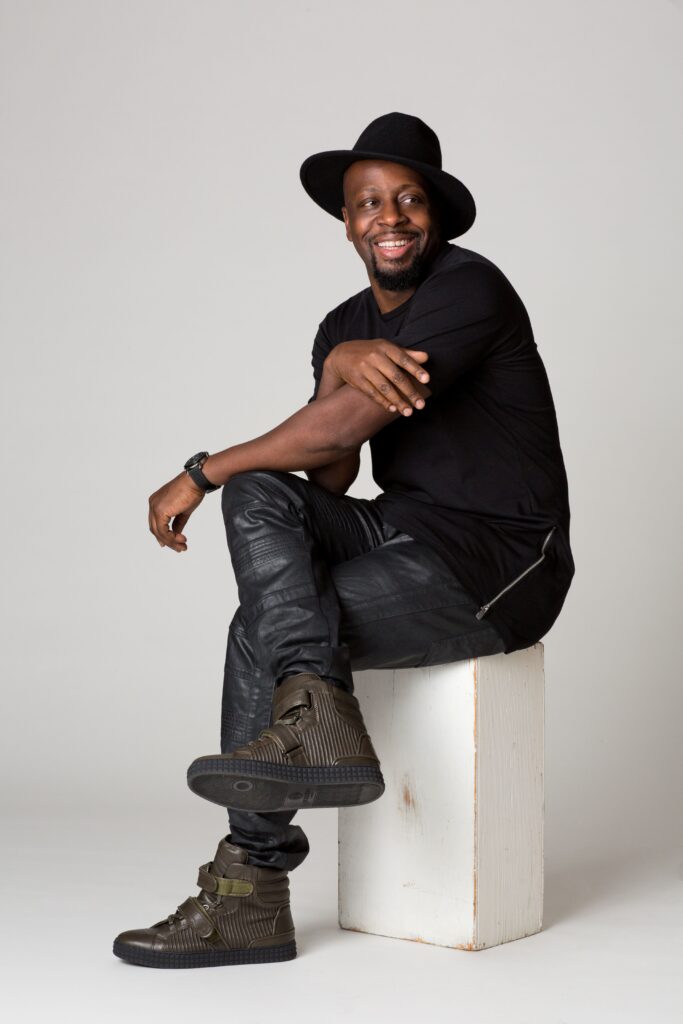
“I want the Caribbean kids to know that their culture is their power, so dig into it.”
What is so special about Antigua for you?
When I’m in Antigua, my soul feels at home. I plan to buy land and build a home here, and that’s a huge thing for me. I have a huge family, and we have a tradition where all the cousins get together once a year – somewhere with a family vibe that doesn’t involve a funeral! I can imagine doing that get-together in Antigua, and I don’t feel that way in many places.
What’s coming up for you?
Netflix is making a film inspired by my life in Haiti called, The Prince of Port-au-Prince, based on how I escaped poverty through imagination. It’s a big production, and a lot of money is being spent. We have the man who wrote the recent Jungle Book and the producer of the last Spiderman onboard. What is exciting is that I get to reinvent a new picture of Haiti to the world through music, allowing me to put ‘Kreglish’ [Creole meets English] in animation and introduce children to new words.
I’ve also created this app called Sodo Mood Lab for movie studios. The idea is that composers who want to put their music in films can place their music on the app’s database, thus allowing music supervisors access to composers of diversity that they would not usually find. Now, every child, no matter where they’re from, who thinks they could score the music for the next Mission Impossible or Gladiator, will be able to link to Sodo.