


By Natalya Lawrence, Antiguan birder and conservationist
Antigua & Barbuda is famously known for gorgeous beaches with powdery white sand and impossibly turquoise waters. And yet, as our tourism slogan goes, “The beach is just the beginning.” In many instances, beaches are flanked on the landward side by their often under-appreciated and dismally less-visited cousin, the wetland! To the untrained eye, wetlands do not hold the pleasing aesthetics of scintillating seascapes fringed by soft, inviting sand. However, once you begin to understand the value of the wetland ecosystem to support our lives and well-being, the earth-coloured water and the mangrove forests will offer a different kind of appeal for the intrepid adventurer.
Once you begin to understand the value of the wetland ecosystem to support our lives and well-being, the earth-coloured water and the mangrove forests will offer a different kind of appeal for the intrepid adventurer.
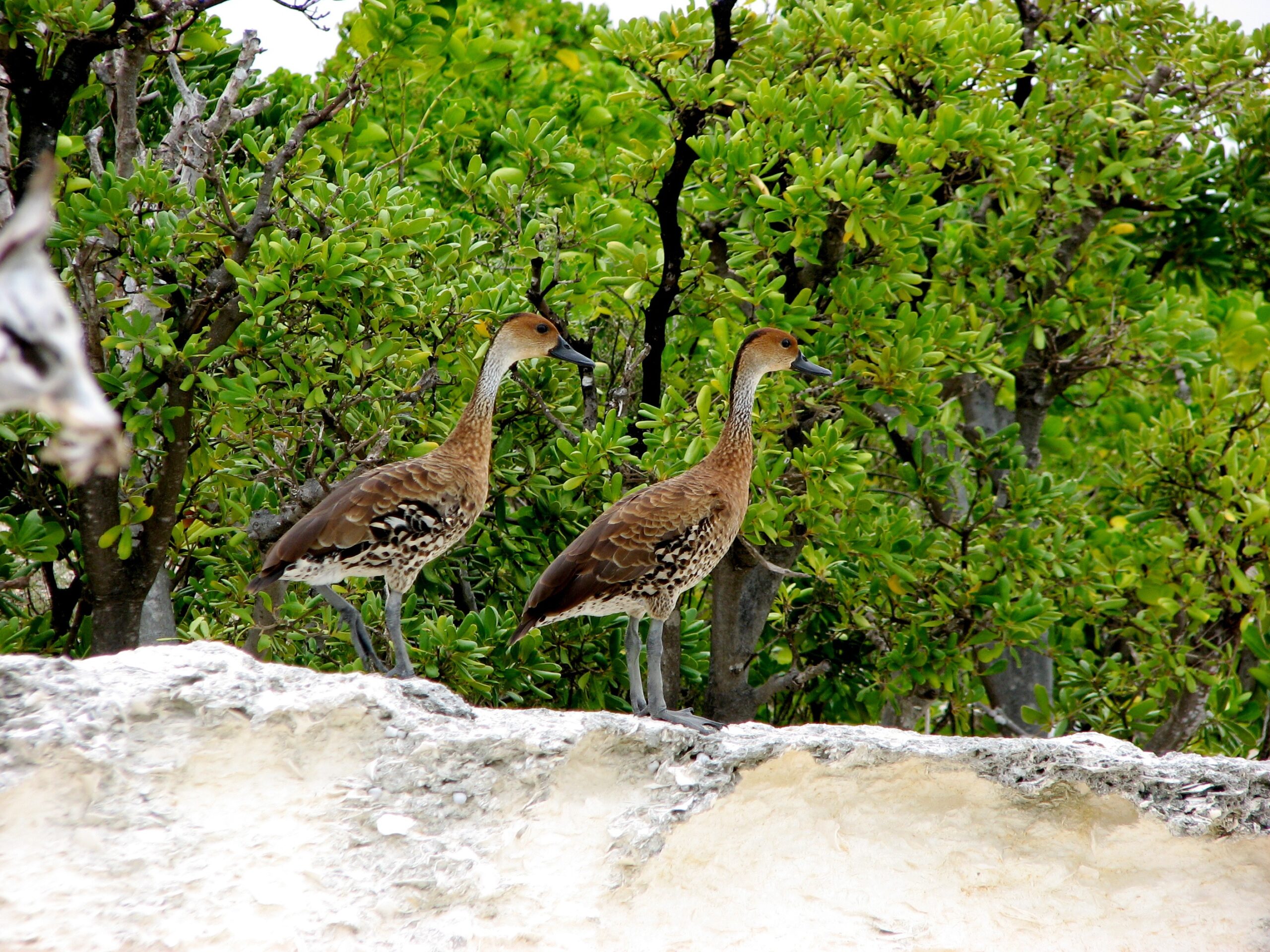
There, just off to your left, on the periphery of your vision, the sudden movement, what could it be? You stand still, hoping that your neutral tones will blend into your green and brown surroundings. Ah! You are rewarded. A family of waterfowl; mom, dad, and young ones, venture out from the rushes and slide effortlessly into the water. Such poise, such rich colours! You are not familiar with this bird and so you ever so slowly refer to your birding app, but not before you gingerly position your camera to grab a few quick shots before the family once again withdraws from view. You remain in awe of their beauty, of their elegance, and confirm them as West Indian Whistling-Ducks!
Indeed, wetlands bring observers up close and personal to biodiversity that cannot be observed on your regular jaunts to the city, to the shopping plazas, to work or to church. Here, quiet trees and still water turn into a squawking, swirling, swooping cacophony of wetland, shore and land birds when no one is noticing. Rare birds such as West-Indian Whistling-Ducks are a sight to behold especially when you consider their story.
Though the Caribbean accounts for only 0.15 percent of the world’s area, we are a proud people who boast about our heritage, culture and of course our natural beauty.
Classified by the Critical Ecosystem Partnership Fund as a Biodiversity Hotspot, the Caribbean is also an area of high endemism. Endemic species are animals or plants that occur in one area and nowhere else in the world. As an example, according to BirdsCaribbean, the region is home to over 700 species of birds, with 171 of those species not shared with any country outside the Caribbean. In many cases, these endemic species are only found on one island.
Classified by the Critical Ecosystem Partnership Fund as a Biodiversity Hotspot, the Caribbean is also an area of high endemism.
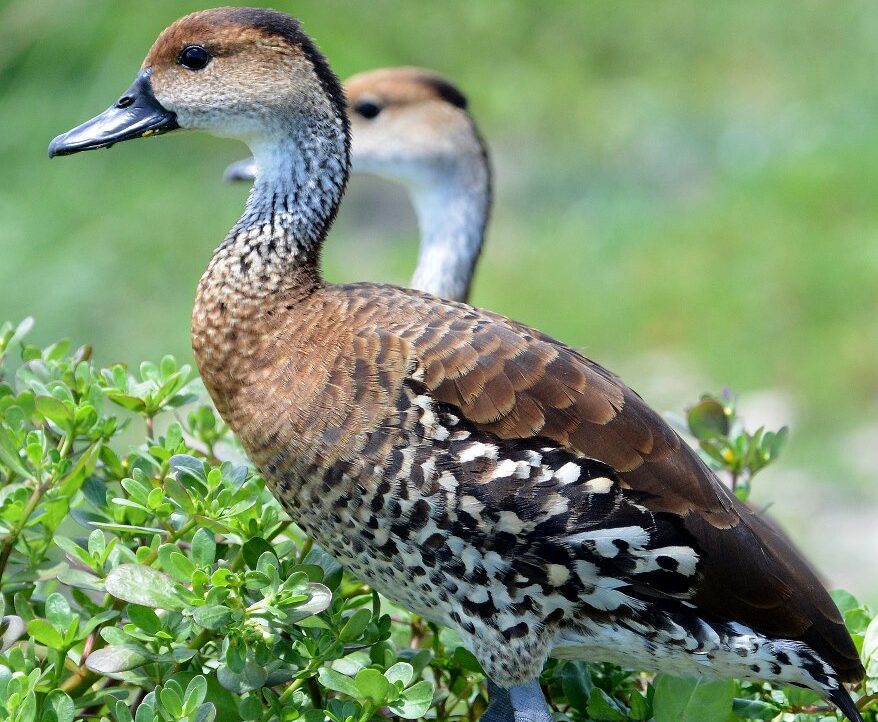
The West Indian Whistling-Duck, Dendrocygna arborea, is a Caribbean endemic with a restricted range, found only on a handful of islands, including Antigua & Barbuda and its offshore islands. This handsome bird is the epitome of grace and elegance. The adults measure nearly two feet and walk with a noble gait, commanding the observer’s admiration. They have deep brown upperparts interspersed with some white and black feathers on the underside. They also boast a shiny black bill and large black eyes.
Wetland inhabitants, they primarily feed on Royal palm berries, other berries and grass seeds. However, during severe dry seasons, and unfortunately for farmers, they also feed on some food crops! Should you score a stare-off with one of these birds, they will pierce into your inner being with their withering gaze. Then, without warning and quite unceremoniously, they fly off, into the distance trailed by their distinct, haunting, banshee-like whistle – an altogether other-worldly experience.
Sadly, this bird is threatened with extinction. Of the eight species of Whistling-Ducks in the world, ours is the most threatened. With our desire to become more advanced countries, we have often pursued traditional, less sustainable development options and our biodiversity has suffered. West Indian Whistling-Ducks constantly face threats such as destruction of their wetland habitats for development, deterioration of their habitats from pollution and illegal dumping, loss of life from natural disasters, and predation of their chicks and eggs by rats, mongooses, dogs and cats – all introduced species that can severely impact endemic plants and animals. Additionally, in some countries, West Indian Whistling-Ducks were heavily hunted. Although legally protected throughout its range, some poaching still occurs. Many persons attribute their shyness to humans as a direct result of hunting.
Of the eight species of Whistling-Ducks in the world, ours is the most threatened.
Their story of survival is amazing though. BirdsCaribbean, a regional conservation NGO, developed a book and an outreach programme to raise awareness about the WIWD and threats to wetlands. Over 150 workshops have been held across the region, training thousands of partners and teachers to educate youth and community members about the duck, the joys of birdwatching, and the values of our wetlands.
One of the most ardent local hunters in Antigua attended one of these workshops and was converted into the biggest advocate for their conservation once he learnt of their significance. His passion led to active conservation work by the Environmental Awareness Group (EAG), to restore their habitats (by permanently removing species such as rats and mongooses), particularly on undeveloped offshore islands and away from the destructive claws of the developing world. It also led to strong educational outreach by volunteers from EAG, and most recently, their protection under the Environmental Protection and Management Act 2019.
Additional international funders and partners such as Cape Cod Bird Club, Conservation Leadership Programme, U.S. Fish & Wildlife Service, Fauna & Flora International, Durrell Wildlife Conservation Trust, Critical Ecosystem Partnership Fund and Disney Conservation Fund have proven their support to the conservation of this bird and its habitat, and education and capacity building of the local team.
It can be challenging to find these birds, particularly during the dry season. However, the advantage of wetlands in Antigua & Barbuda is that they are often found in central locations, along a regularly travelled road. If West Indian Whistling-Ducks are on your Life List, we encourage you to visit easily accessible sites such as McKinnon’s Pond, southwest of Sandals Resort; Potworks Dam on the way to the historic villages of Bethesda, Newfield, St. Phillips and Freetown; Christian Cove between Bethesda Village and Christian Hill; Bethesda Dam, in Bethesda Village; or the wetlands at Darkwood Beach, on your way to Crabbe Hill Village.
Other amazing opportunities to view these birds are on the shores of Jabberwock Beach or Shell Beach. Like clockwork, these crepuscular birds, active mostly at dawn and dusk, can be observed gracefully slicing the skies as they come in at early morning from the safety of the offshore islands, or as they head off around sunset to different wetlands to feed during the night.
As we in Antigua & Barbuda continue to monitor our Whistling-Duck populations we are excited for you to document your sightings on eBird Caribbean (https://ebird.org/caribbean/home). Remember to be considerate around wildlife, being careful not to destroy or degrade habitat, or scare the birds. Birding is a low-impact, cost-effective and fulfilling way to learn about our country. Get to know us, one bird at a time. Happy Birding!