


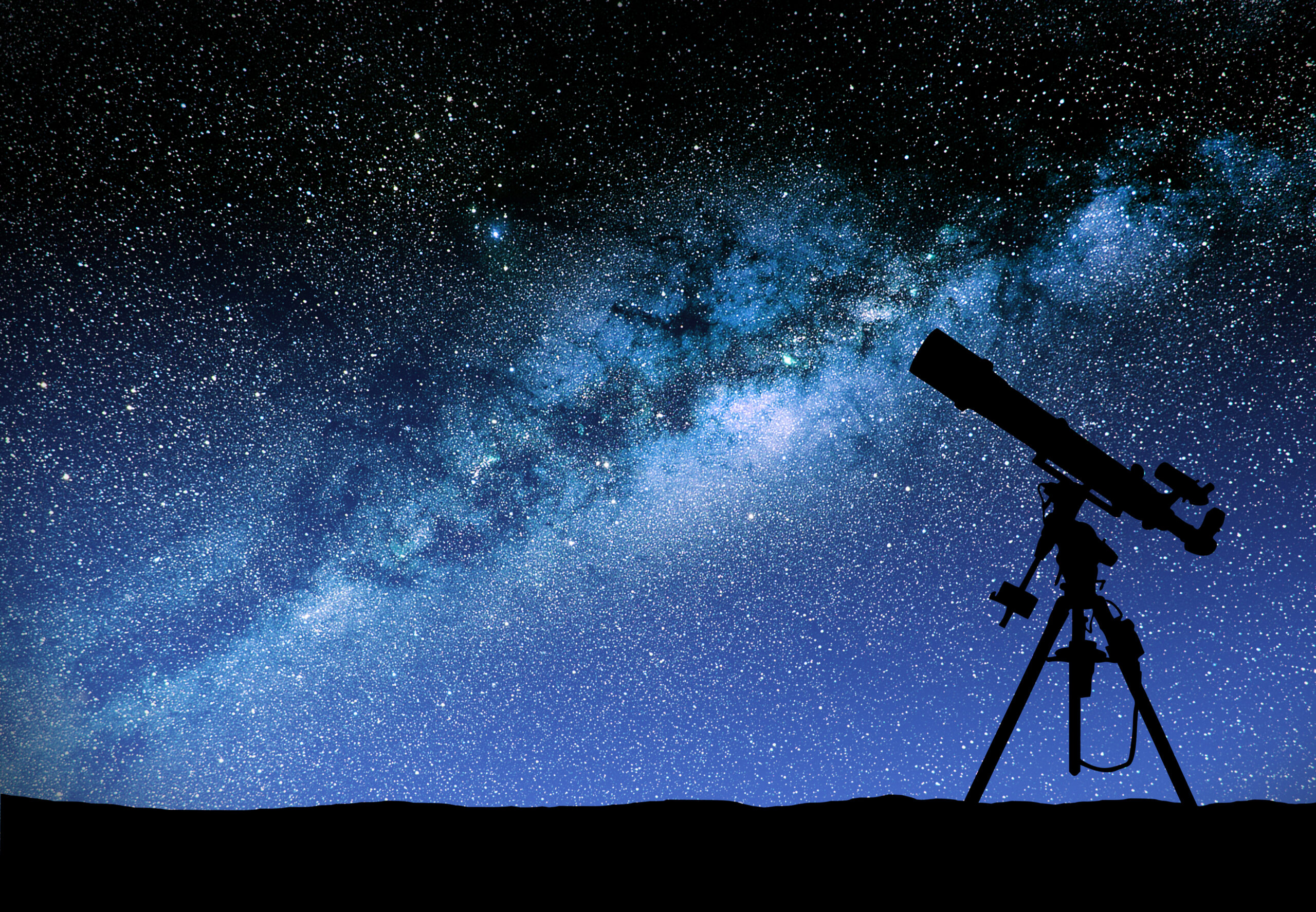
Since the dawn of time, humans have looked up at the night sky in awe. Ancient navigators charted courses by the stars, and myths and legends were written in their constellations. Civilisations also built monuments aligned with celestial movements. The heavens were once our compass, calendar and storybook all in one. Yet today, for much of the world, that glittering canvas is vanishing behind a growing haze of artificial light.
Modern life has wrapped us in a cocoon of brightness. Streets, buildings and billboards glow through the night, offering convenience and safety but also drowning out the universe above. Astronomers are sounding the alarm. The rate of human-made light in the night sky is increasing by around 10 percent each year. At this pace, many of the major constellations could be unrecognisable within two decades. The Milky Way is already hidden from one-third of humanity, and in Europe and North America the figure is even higher. A loss of this magnitude is not just scientific but cultural, severing our connection with the cosmos and stripping away a shared heritage of wonder.
“A loss of this magnitude is not just scientific but cultural, severing our connection with the cosmos and stripping away a shared heritage of wonder.”
The concern is not only about what we fail to see. The loss of dark skies directly hampers scientific discovery. Telescopes on Earth rely on clear skies to unravel mysteries ranging from planetary systems to the origins of the universe. When satellites, streetlamps and floodlights wash out the heavens, astronomers find themselves battling a tide of interference that no instrument can overcome. From only a few thousand satellites in orbit a decade ago, the number has surged to more than twelve thousand today, many of which reflect sunlight and add streaks of brightness across telescope images. Protecting dark skies is therefore as much about defending our ability to learn as it is about protecting our ability to dream.
And it is not only astronomers who suffer. Our own health is at stake. Human beings evolved with the natural rhythm of day and night coded into our DNA. Darkness triggers the release of melatonin, the hormone that regulates sleep, while exposure to light at night suppresses it. Disturbances to this delicate cycle are increasingly linked to sleep disorders, depression, obesity, diabetes and even certain forms of cancer. Scientists warn that just as climate change alters temperature in ways that ripple through every ecosystem, so altering natural light cycles can have profound effects on our own wellbeing. In a world that prides itself on twenty-four-hour access to everything, we may be paying the price with our health.
Nature, too, reels from the glare. For billions of years, life has synchronised with Earth’s predictable alternation of light and shadow. Artificial illumination scrambles this balance. Migratory birds that once relied on the moon and stars to find their way are now lured towards glowing skylines, colliding with buildings or exhausting themselves as they circle in confusion. Every year, millions of birds perish in this way. Amphibians, whose nightly chorus is key to reproduction, fall silent under the glare of lamps. Insects spiral fatally around bulbs, weakening food webs that sustain countless species. Entire ecological chains unravel when such small but crucial creatures decline.
“Migratory birds that once relied on the moon and stars to find their way are now lured towards glowing skylines, colliding with buildings or exhausting themselves as they circle in confusion.”
And then there are the sea turtles, perhaps the most poignant victims of all. For these ancient mariners, who return year after year to nest on the beaches in places like Antigua & Barbuda, light is a matter of life and death. Hatchlings instinctively crawl towards the brightest horizon, which in natural conditions is the shimmer of moonlight on the sea. When beachside hotels and houses shine white bulbs, the babies turn inland instead, perishing from dehydration or predators before they ever touch the waves. With a survival ratio of one in 1000 from hatchling to fully mature adult, they need all the help they can get to reproduce. After years of lobbying, conservationist Mykl Clovis-Fuller of the Antigua Sea Turtle Project (ATSP) made strides through the introduction less disruptive red-filtered lights on nesting beaches like Darkwood and Jabberwock, but the threat remains wherever development creeps along the shore. But unfortunately, this is just a drop in the ocean worldwide, and these creatures, who survived the age of the dinosaurs, now face a threat that is modern yet utterly unnecessary.
“Unlike climate change or deforestation, light pollution is a problem that could be solved almost instantly by simply flicking the switch.”
Unlike climate change or deforestation, light pollution is a problem that could be solved almost instantly by simply flicking the switch. The mantra among experts is “keep it low, keep it shielded, keep it long.” Lights should be low to the ground, angled downward to avoid spillage into the sky, and ideally amber in colour to limit their ecological toll. Above all, lights should be turned off when not needed. In Florida, such measures have already saved tens of thousands of turtle hatchlings, proof that small changes can have immediate and dramatic results.
The idea of formally protecting the night sky is not new. As far back as 1958, Flagstaff in Arizona became the first city in the world to pass laws safeguarding its dark skies for astronomy. Since then, the concept has grown into a global movement, with official dark sky reserves and parks now recognised across several continents. These reserves are areas where artificial light is strictly controlled to preserve natural darkness, benefiting both wildlife and human visitors. Today, places such as Big Cypress Natural Preserve in Florida, Exmoor and Snowdonia in the UK, and Jasper National Park in Canada are celebrated as dark sky destinations. For travellers, they offer a chance to rediscover the heavens in all their splendour, while for scientists and conservationists, they demonstrate how policy, community involvement and simple lighting choices can reclaim the night.
For Antigua & Barbuda, this conversation carries a special weight. Here is one of the Caribbean’s relatively dark corners, where away from St John’s or the island’s main resorts, the skies still dazzle with constellations. Barbuda, with its low development, is even more spectacular. Out at sea, far from shore, the heavens still appear in their full glory, the same skies that guided the first peoples across the oceans.
Astrotourism is now on the rise worldwide, drawing travellers to places where the stars can still be seen. The twin islands are perfectly poised to benefit. Their remote beaches, still untouched in many parts, are both havens for wildlife and windows to the universe. Imagine a visitor lying back on the sand at Rendezvous Bay or Spanish Point in Barbuda, tracing the Milky Way overhead and realising that they are witnessing something increasingly rare on this planet. That memory becomes woven into the fabric of their experience of Antigua & Barbuda.
“The Milky Way is already hidden from one-third of humanity, and in Europe and North America the figure is even higher.”
The night sky is part of our environment, as essential to human experience as the air we breathe and the landscapes we live within. To lose it would be to sever one of our oldest and deepest bonds with nature. The good news is that darkness is still within our power to restore. By embracing responsible lighting, respecting the natural rhythms of life and placing limits on the unchecked spread of satellites, the world can reclaim its stars. The heavens that once guided our ancestors need not fade into memory, but can remain a shared inheritance for generations to come.