


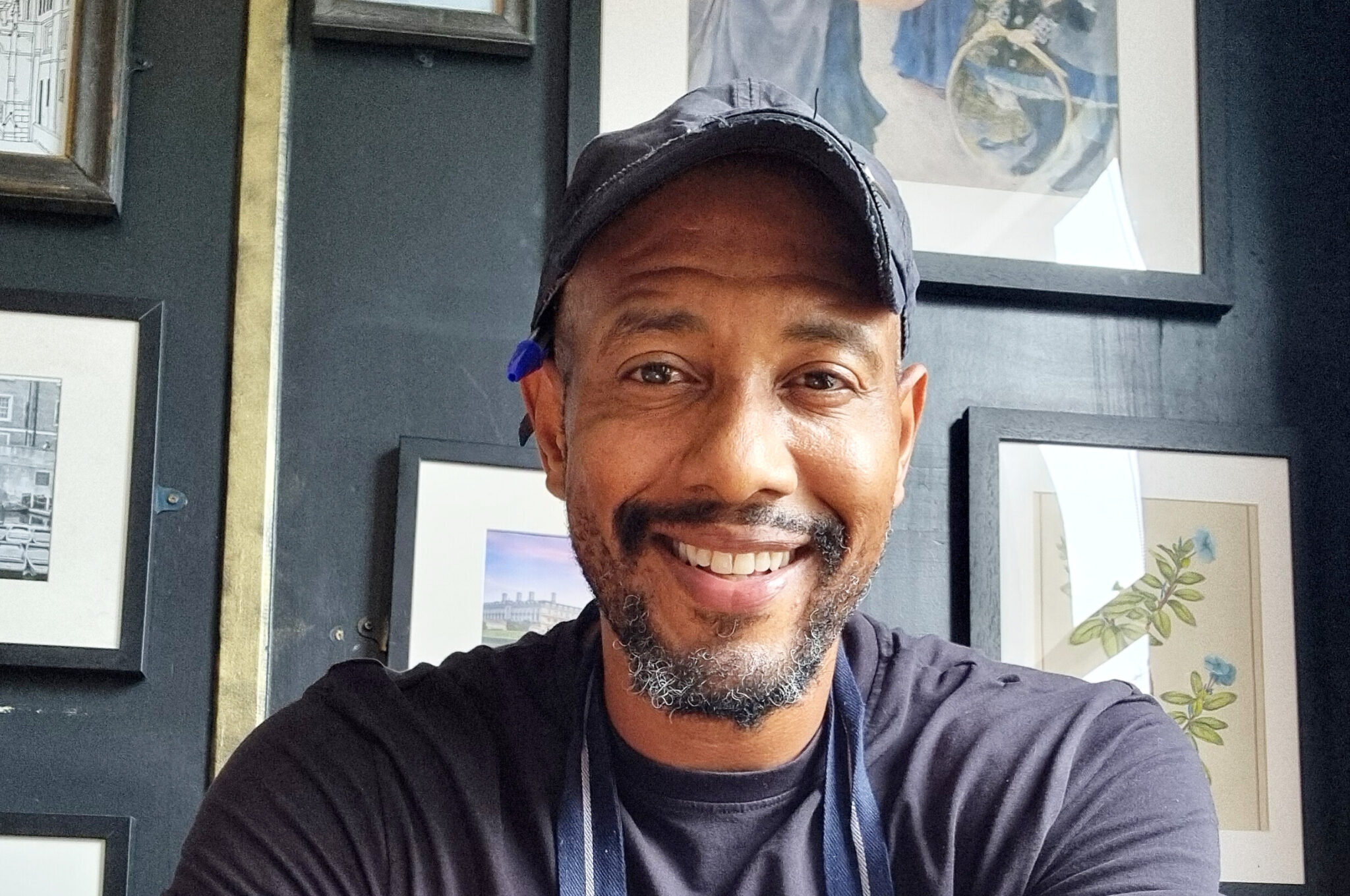
Cambridge-based Antiguan chef Kareem Roberts, born in the UK but raised in Antigua, has earned recognition for bold flavour, refined technique and a style of cooking that balances tradition with modern interpretation. He leads the kitchen at The Burleigh Arms in Cambridge and has brought his craft to television as a contestant on Great British Menu. Now he adds author to his growing résumé with Cassava & Cardamom, a cookbook inspired by his experiences, influences and food memories. Culinary Month is an important part of Kareem’s connection to Antigua, and this May sees him return to the island once again. We spoke to him about the journey behind the book, his experiences in the UK, the evolution of Caribbean cuisine and the island connection that continues to influence his cooking.
You began working in kitchens at 26, later than many of your peers. What led you to cooking, and when did you know it was your passion?
Without sounding overly romantic about it, I have always felt a natural pull toward the kitchen. Some of my earliest memories are tied to taste and smell, saltfish, condensed milk, the small details that most people overlook, but stayed with me in a very vivid way.
I started cooking not long after that, with varying degrees of success, but enough curiosity to keep going. So while I entered professional kitchens later than many of my peers, I do not necessarily see myself as starting late. I had already spent years developing a relationship with food, just outside of a formal setting.
Antigua is in a strong position to establish itself as a premium dining destination within the Caribbean, not just because of its ingredients, but because of its people.
For me, the transition into professional cooking was not so much a discovery of passion as a decision to take something that had always been present and pursue it with intent. Over time, that intent turned into discipline and, eventually, identity.
Your cooking is often described as modern Caribbean. How do you interpret that description, and how would you describe your own cooking?
I see modern Caribbean cooking as an ingredient-led movement, rather than something that exists purely as an extension of tradition. Our heritage is incredibly important, but I do not believe it should limit how we express ourselves today.
For me, it begins with what is indigenous and available to us. The Caribbean is rich in ingredients, but many of them are still explored within a relatively narrow framework. Modern Caribbean cooking is about expanding that framework, applying new techniques, new perspectives and a deeper level of curiosity to ingredients we think we already understand.
It is not about disregarding tradition, but about building on it with intent. I do not feel a responsibility to simply recreate what is expected. Instead, I feel a responsibility to explore what is possible, particularly in small island nations where abundance and limitation often exist side by side.
Modern Caribbean cooking is about expanding that framework, applying new techniques, new perspectives and a deeper level of curiosity to ingredients we think we already understand.
That tension, between what we have and what we can do with it, is where I think modern Caribbean cuisine really begins to evolve.
The Burleigh Arms recently earned two AA Rosettes for culinary excellence. What did that recognition mean to you personally and professionally?
The two AA Rosettes gave me a sense of validation, and I think it is important to be honest about that. As much as we like to believe we operate independently of recognition, there is something meaningful about having your work acknowledged within a respected framework.
For me, it was not about chasing awards, but about seeing a standard I hold myself to reflected externally. I am naturally competitive and deeply invested in what I do, so if there is a system that recognises culinary excellence, I believe in engaging with it fully and, where deserved, being recognised within it.
At the same time, that recognition does not define the work. It simply reinforces that the direction I am moving in has merit.
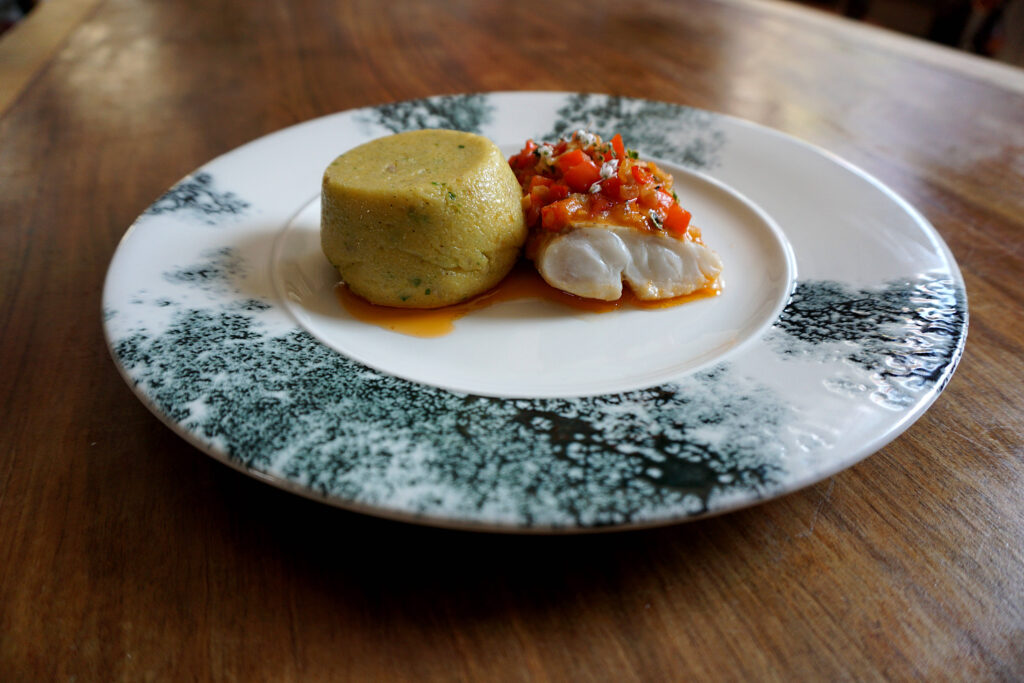
Caribbean cuisine is loved by those who know it, yet still feels undercelebrated in the wider culinary conversation. Why do you think it remains underestimated?
I do not necessarily believe Caribbean cuisine is underestimated as much as it is undefined. People generally understand it as bold and full of flavour, but beyond that, perceptions tend to be quite narrow.
Dishes like jerk chicken, roti and grilled lobster have become shorthand for the region, and while they are important, they only represent a fraction of what Caribbean food actually is. There is a great deal of nuance, regionality and cultural variation that often goes unrecognised.
I do not necessarily believe Caribbean cuisine is underestimated as much as it is undefined. People generally understand it as bold and full of flavour, but beyond that, perceptions tend to be quite narrow.
I think the responsibility lies with us, as chefs and contributors to the culture, to continue building that definition. The more we document, explore and present our food with clarity, the more complete the picture becomes. From there, people are not only able to understand it better, but to assess and appreciate it on its own terms.
Appearing on the BBC’s Great British Menu brought your cooking to a wide audience. How significant was that moment for Caribbean cuisine, and for you personally?
That was certainly a milestone moment for me, and to some extent, for Caribbean cuisine as well. Great British Menu was always a show I respected and studied, particularly the calibre and pedigree of the chefs who had appeared on it over the years.
Personally, it represented an opportunity to step into that arena and test myself at the highest level. Beyond that, I hope my involvement served as a point of reference for chefs of the Caribbean diaspora, that we are capable of operating within those spaces and contributing meaningfully to them.
If there is one thing I would want it to demonstrate, it is that our potential is not limited. With the right intent and determination, we can stand alongside the very best.
Can you tell us more about Cassava and Cardamom and how the book came about?
My relationship with books has been a defining part of my development as a chef. In the absence of formal, high-level training, I turned to a more autonomous form of education, surrounding myself with professional cookery books from an early stage. Over time, I became a reflection of what resonated most with me across hundreds of books and nearly two decades of study.
Given that foundation, writing a book felt less like a milestone and more like an inevitability. It was a natural extension of how I had learned and how I continue to think about food.
I will always attribute my palate to my Antiguan upbringing. That is where my love for flavour began, bold, expressive and deeply rooted in memory.
At the end of 2024, after earning a place in the Estrella Damm Top 100 Gastropubs, I felt it was the right moment to make a more permanent contribution to the shelves I had drawn so much from. I approached a publisher with a clear vision, made a very direct case for the book, and within six months had completed the full manuscript, recipes and photography, which would become Cassava and Cardamom.
You were born in the UK, raised in Antigua and then returned to the UK for your work. How has that dual upbringing shaped your palate and your sense of comfort food?
I will always attribute my palate to my Antiguan upbringing. That is where my love for flavour began, bold, expressive and deeply rooted in memory.
It was not until I moved to the UK in 2010 that I began to understand how to shape that palate with technique. Exposure to fine dining introduced me to precision, restraint and a different kind of discipline, which allowed me to refine how I express flavour rather than change it.
In terms of comfort, it still leans heavily toward those early influences. The food I return to instinctively is rooted in Antigua, but the way I approach it now is informed by everything I have learned since. It is less about choosing between the two and more about allowing them to coexist.
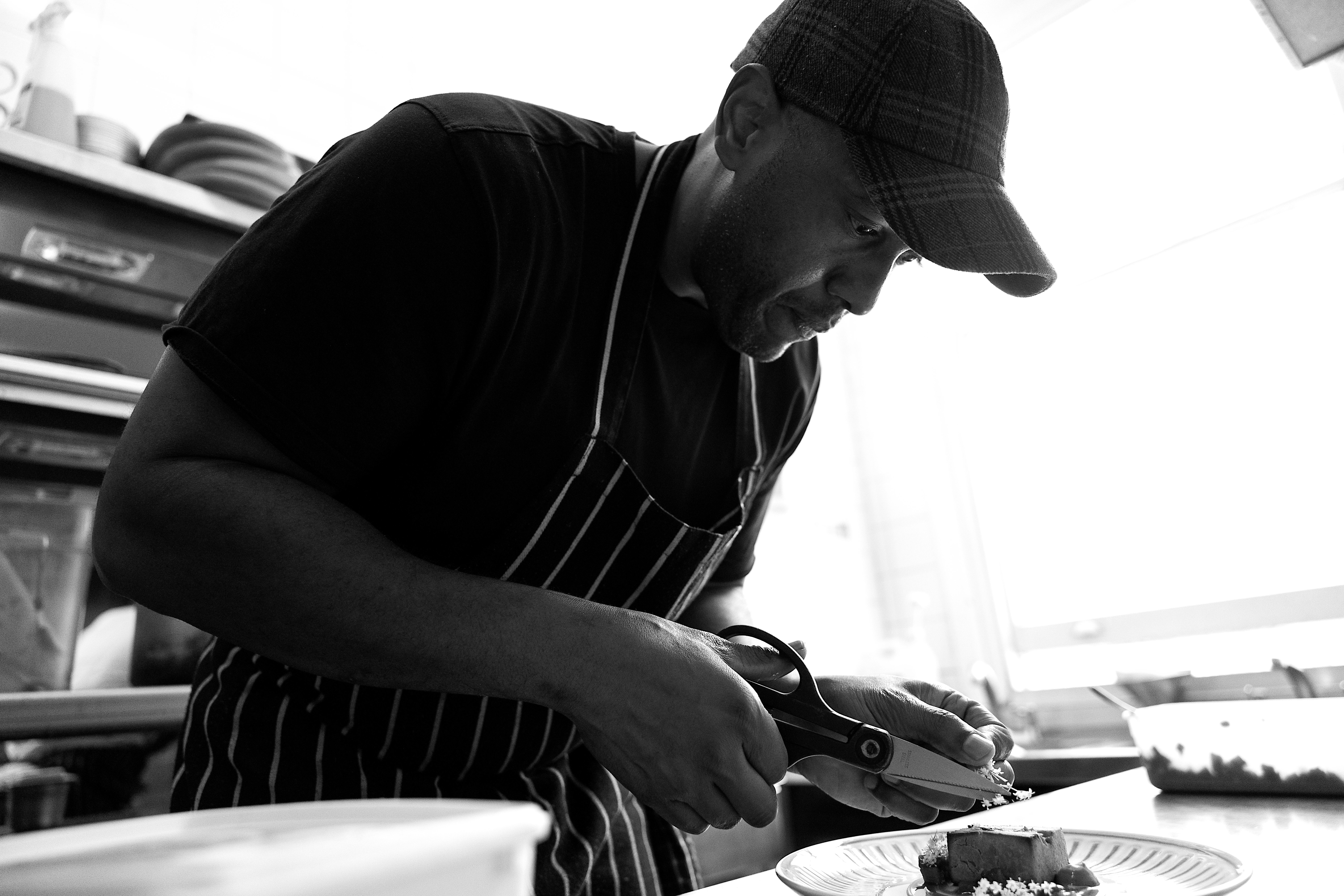
What role do events like Antigua and Barbuda Culinary Month play in strengthening the islands’ reputation as a food destination?
Culinary Month is not only an incredible initiative, but an essential one. Antigua is in a strong position to establish itself as a premium dining destination within the Caribbean, not just because of its ingredients, but because of its people.
One of the things we often overlook is our human capital. When you come to Antigua for food, you are not only experiencing honest ingredients prepared with care, but the people behind them, individuals who understand that what they create becomes part of someone else’s memory. That responsibility is something we take seriously.
Hospitality, at its core, is about connection. It is easy to focus on the product, but what lasts is how something made you feel. Those moments stay with people, and they return to them, sometimes privately, sometimes through future visits.
Culinary Month is not only an incredible initiative, but an essential one. Antigua is in a strong position to establish itself as a premium dining destination within the Caribbean, not just because of its ingredients, but because of its people.
Culinary Month gives us a platform to create those lasting impressions. It allows us to shape meaningful experiences that not only reflect who we are but also encourage people to return and engage with our culture on a deeper level.
You have talked about a lack of Black representation as chefs when you started out. How has that pushed you to success?
That lack of representation has always been a catalyst for me to challenge the status quo. I believe that if we want to change the narrative, we have to become the ones shaping it.
There are challenges, of course, but I have never seen them as a limitation on potential. If anything, they have reinforced my approach. I have always been aware that I may not be measured by the same standards as some of my peers, but rather than allowing that to discourage me, it pushed me to apply myself more intensely.
Things have improved over time, and the landscape today is not what it was when I first moved to the UK in 2010. But I still carry that mindset with me, not out of frustration, but as a form of discipline. I am very comfortable holding myself to a higher standard and bringing more than is expected.
Growing up with a father who is a national sporting icon is a unique experience. How did that influence your own sense of ambition and identity?
In its simplest form, it gave me a proximity to excellence through discipline that most people do not experience. Being around someone who had achieved at that level dispels the idea that something is not possible. It shifts your perspective from ‘Why can’t I?’ to ‘What does it actually take?’
What I came to understand is that success is rarely built on a single defining trait. More often than not, it comes down to consistency over time. Loving what you do certainly helps, but without sustained commitment, mastery remains out of reach.
What I came to understand is that success is rarely built on a single defining trait. More often than not, it comes down to consistency over time.
My father did not just enjoy what he did; he took it seriously, and he committed to it fully. That, more than anything, shaped how I view my own work. Passion is important, but for something to become meaningful, it has to move beyond that. It has to become a way of life.
Where is your favourite spot in Antigua?
I would have to split that into two.
For simply eating, Casa Roots stands out. Having dined there in recent years, I was genuinely impressed by the level of sophistication and restraint in the cooking. It is a place where both the food and the setting feel considered, and it is absolutely worthy of wider recognition.
The second would be Cuties in Redcliffe Quay. It holds a different kind of significance for me, as it was where I first stepped into a professional kitchen, back when it was known as Cafe Napoleon. So while it may represent something very different from Casa Roots, it is tied to a very important starting point in my journey.
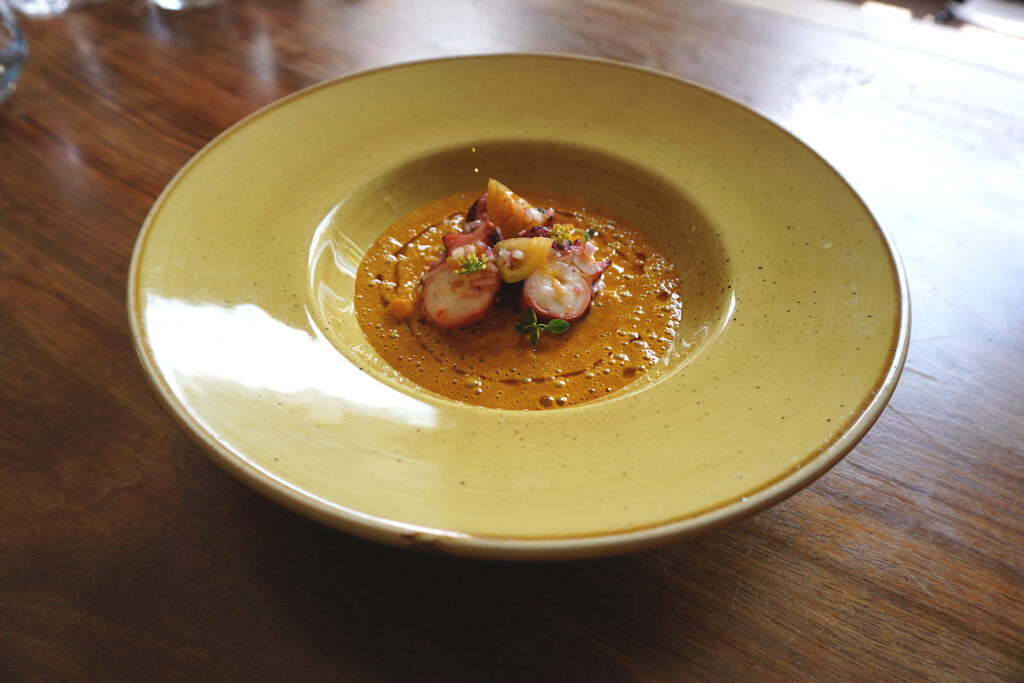
What is next for you?
Next, I want to focus on making a meaningful contribution to my homeland, Antigua. Being involved in initiatives like Culinary Month is something I value, but I believe there is more to be done.
There is a growing international conversation around Caribbean food in metropolitan markets, but I am equally interested in how that conversation translates back to the region itself. For me, it is important that the development of our cuisine is rooted in culture and the people who shape it.
When I left Antigua 16 years ago, I did so in pursuit of experience and exposure. I often think about those in a similar position today who may not have the same opportunities to leave. It raises an important question: What would it mean to bring that level of insight and development to them, rather than expecting them to go elsewhere to find it.
I see the future of Antigua’s culinary identity as a collaborative effort, and I am committed to playing a role in that process. Ultimately, it is about creating a foundation that the next generation can build upon, and I look forward to seeing what that evolves into.