


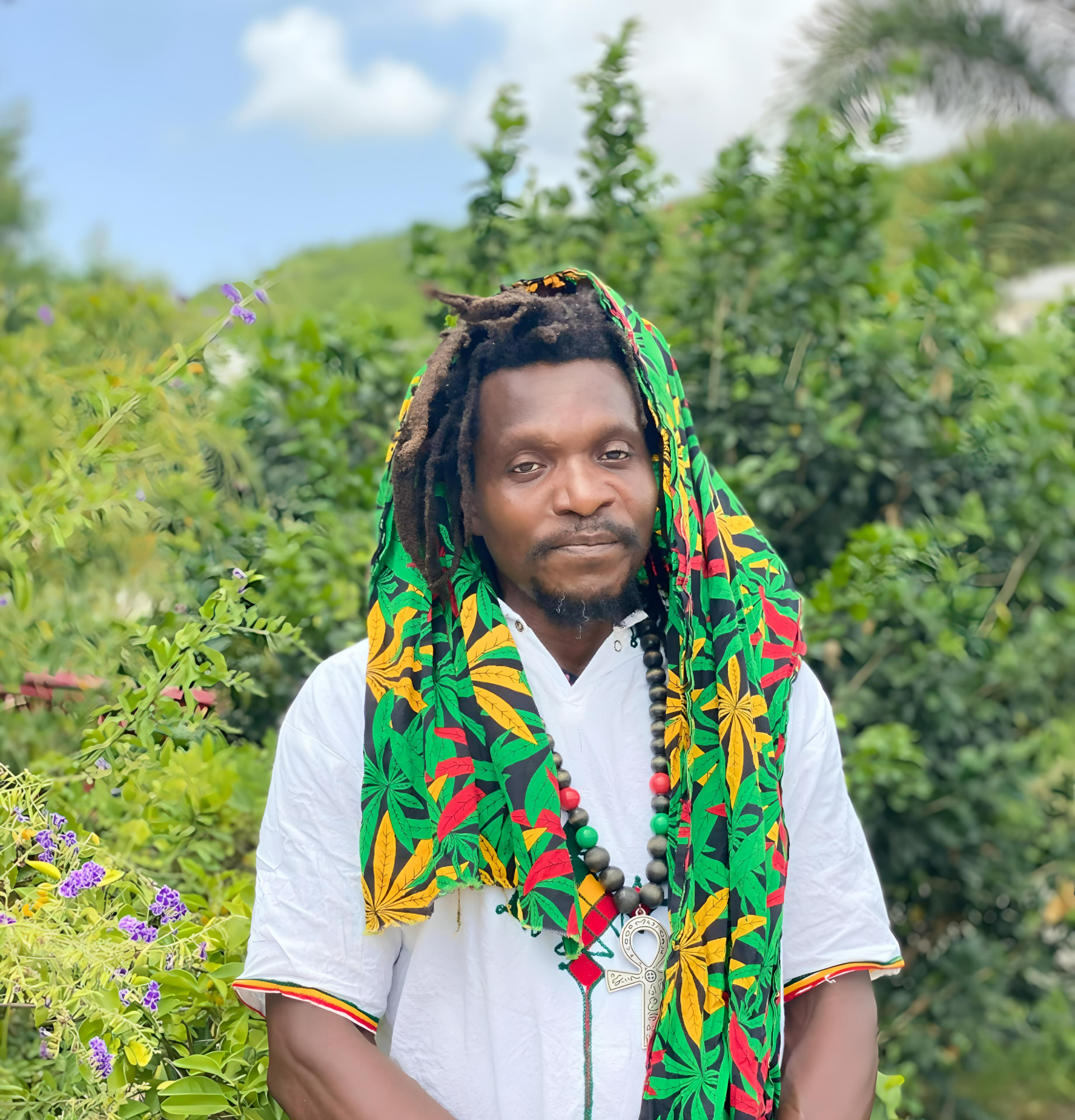
High Priest Bongo Selah has long been a leading voice within Antigua & Barbuda’s Rastafari community, and his recent appointment as the nation’s newest Rastafari Ambassador marks a significant milestone. Tasked with strengthening the relationship between the government and the faith-based community he represents, Selah brings not only spiritual insight but also a deep commitment to cultural preservation, education and justice. In this interview, he shares his insights on the spiritual path of Rastafari, the long journey toward social recognition, and his hopes for a future grounded in unity, peace and respect for all.
Can you tell us a bit about the Rastafari faith? Is it a religion?
Rastafari is not a religion in the conventional sense. A religion has rules, regulations and structures, but Rastafari is a spiritual entity – a way of life. It connects us to the universe and each other. It’s about promoting unity, respect and love for one another. It’s not about division or race; it’s about the universal love and connection that binds us all. Bob Marley once sang these words based on a speech by of Emperor Haile Selassie, “Until that day, the dream of lasting peace, world citizenship and the rule of international morality, will remain in but a fleeting illusion, to be pursued but never attained.” The essence of Rastafari is about peace and universal love, where we transcend race, colour and nationality. We are all interconnected, and we must live in harmony with one another and with the Earth. We harness the energy of the sun and the natural forces around us.
You have a deep connection to the universe, the stars and time. Can you explain that further?
We Rastafari see the universe as interconnected. The stars, the planets and the cycles of nature all influence us. We plant our food according to the signs of the stars and the phases of the moon. The moon governs the tides and our cycles, influencing everything in the natural world. Just as the Bible talks about the creation of man on the sixth day, we see that number as significant because it aligns with the very structure of human life. We believe that the Bible contains both historical and metaphysical lessons: there are truths in its symbols and numbers. For instance, the number twelve is significant as it reflects the twelve signs of the zodiac, the twelve tribes of Israel and the twelve disciples of Christ.
“Gaston Browne’s government was the first in the Caribbean to formally apologise to Rastafari for past injustices and we are very grateful. This recognition is a step toward greater acceptance, but there’s still work to be done.”
How do you see the role of Rastafari today?
Over time, there has been more recognition and respect for Rastafari in Antigua. Historically, society has never accepted us, and we have been looked upon as criminals, being scorned and rejected. Gaston Browne’s government was the first in the Caribbean to formally apologise to Rastafari for past injustices and we are very grateful. This recognition is a step toward greater acceptance, but there’s still work to be done.
You’ve mentioned the need for more educational initiatives. How are you working to spread this message?
We are using social media to reach more people and share the teachings of Rastafari. We’re also building a cultural city here in Antigua where anyone can come and experience the culture firsthand. Having been raised by elders, most of what I learned came from their teachings, and it’s essential to pass this knowledge on. We’re working on creating programmes for young people – there’s a lot of idle time and violence in some parts of Antigua. We want to offer an alternative by teaching skills like agriculture, herbal medicine and even sustainable living through cannabis cultivation.
Speaking of cannabis, what role does it play in Rastafari culture?
Cannabis is an integral part of our culture, but it’s not just about recreational use. It’s about the healing properties and its connection to nature. Many people don’t realise that cannabis can be used in its natural state without causing intoxication. It’s only when heat is applied that it creates the euphoric feeling. We use it as a part of a holistic lifestyle: for healing, for spiritual connection and for health. We promote healthy living through organic food and we teach the importance of a plant-based Ital diet.
You recently became the Rastafari Ambassador in Antigua. What does that role mean to you?
It’s an honour to serve as the Rastafari Ambassador. My role is to continue the work that has been laid out by past ambassadors. When His Majesty, Haile Selassie, came to Jamaica in 1966, he instructed the Jamaican government to send an ambassador to Ethiopia. Antigua became the first to do this formally and I’m proud to follow in the footsteps of my two predecessors. This role is about building bridges between Africa and the Caribbean and working toward greater unity and understanding.
“This role is about building bridges between Africa and the Caribbean and working toward greater unity and understanding.”
How do you see the relationship with Ethiopia developing?
Ethiopia is the birthplace of Rastafari, and it holds deep spiritual significance for us. It is also home to the headquarters of the African Union. We aim to strengthen the connections between the Caribbean and Africa, particularly in agriculture and culture, while capitalising on Ethiopia’s role as a hub of ancient knowledge, especially in sustainable farming practices. I look forward to going there, learning more, and bringing that knowledge back to Antigua to improve our own agricultural practices.
Looking ahead, what are your goals as the Rastafari Ambassador?
My goal is to continue promoting the principles of Rastafari: peace, love and respect for nature. I want to create a centre where people can learn about sustainable living, agriculture and the Rastafari way of life. I also aim to promote economic development and support the preservation of Rastafari culture in the Caribbean and Africa, ensuring Rastafari communities receive the recognition they deserve. This is about more than just religion; it’s a way of life that can bring peace and unity to the world.
Finally, what is your message to the people?
My message is to stay strong, stay true to yourself and embrace the love and peace that Rastafari represents. Life is about balance – both the material and the spiritual. We must live in harmony with nature, with each other and with ourselves. Be patient, be humble and always seek to do good. Rastafari is a way of life for everyone, and we all have a part to play in creating a better world.