


By Desley Gardner
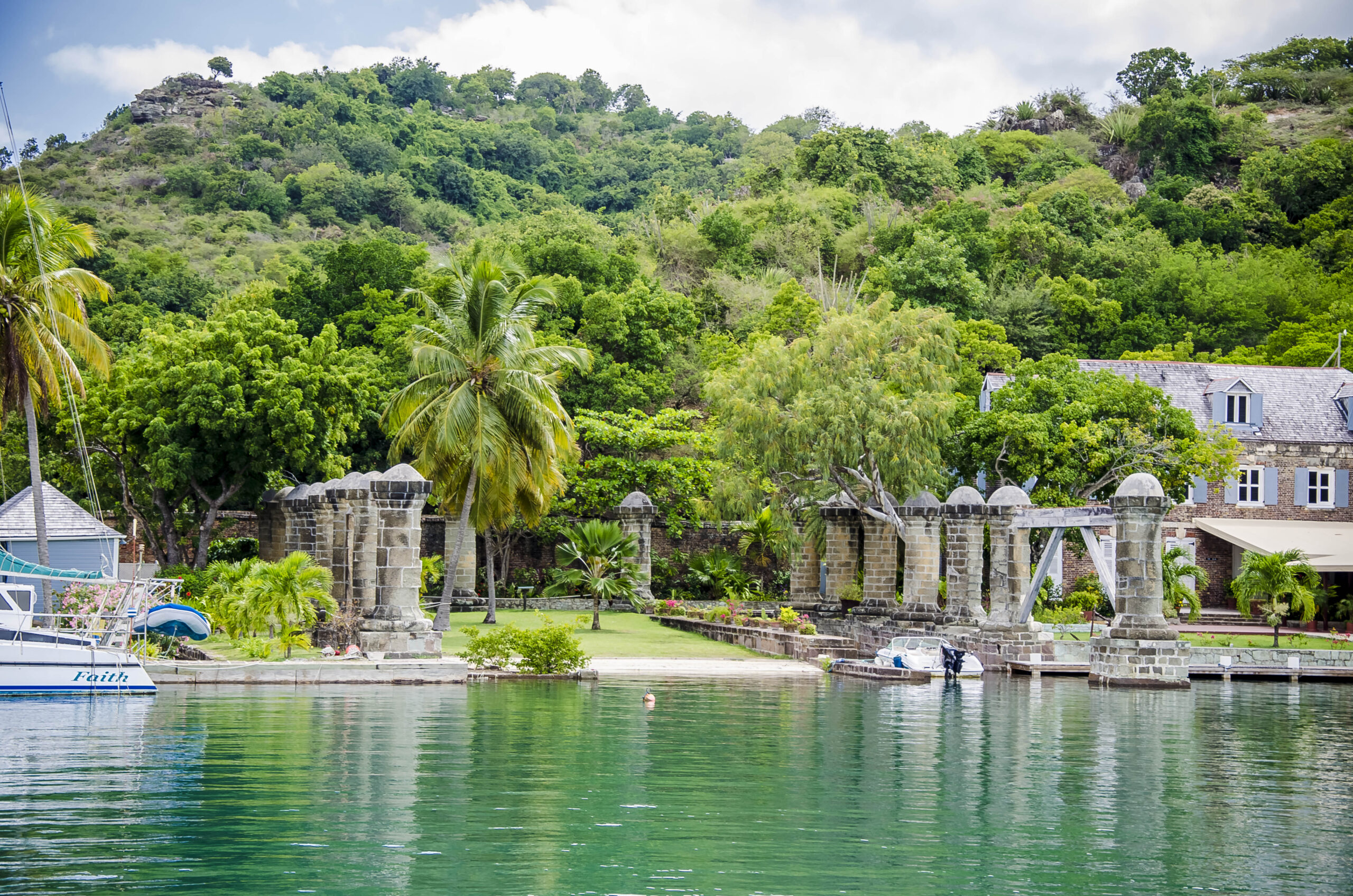
Three centuries after Admiral Nelson famously dismissed it as an “infernal hellhole,” the Antigua Naval Dockyard stands as a remarkable testament to endurance, transformation and vision. Its evolution from a bustling British naval outpost to the beloved Nelson’s Dockyard and, ultimately, to its UNESCO World Heritage status, has far exceeded anything the Admiral himself could have imagined. The amenities have improved beyond measure; the purpose has broadened, and the people who have shaped the Dockyard, from those who built it to those who safeguard it today, have left indelible marks on a site that continues to thrive at the heart of Antigua & Barbuda’s continuous cultural landscape.
On 25th of September 1725, the Antigua Legislature passed An Act to Invest Certain Lands in His Majesty, His Heirs and Successors for the Use of His Majesty’s Ships of War. With one decisive instruction, the first Dockyard at English Harbour was born, setting in motion a legacy that has endured for three centuries. What began as a safe haven for the repair and protection of British warships against hurricanes and piracy quickly grew into a centre of military strategy and maritime enterprise.
From 1725 to 1899, the Royal Navy shaped the Dockyard and its surrounding fortifications, from Shirley Heights and the Blockhouse to Fort Charlotte and Fort Berkeley, leaving a landscape deeply marked by naval power and the interactions of European sailors and soldiers with free and enslaved African labourers. Together, these communities created a cultural landscape rooted in Georgian-era design yet reshaped to Caribbean realities. This fusion of heritage and resilience remains etched into every stone wall, bastion, fortification, military barracks and pathways of the Dockyard and its surrounding facilities today, a quiet reminder of the hands and histories that built it.
Its vision is to ensure that the Dockyard and its surrounding landscapes are not only preserved for their historical value but also remain resilient in the face of 21st-century challenges.
After its naval abandonment, the Dockyard entered new chapters of adaptation and rebirth. The 1960s saw the rise of the charter yacht industry alongside conservation work led by the Friends of English Harbour. Together they sparked the Dockyard’s steady transformation into a heritage tourism hub. By the 1980s, heritage management had taken centre stage, culminating in the establishment of Nelson’s Dockyard National Park in 1984, which protects 15.9 square miles (roughly 41.2 square kilometres) of marine and terrestrial landscapes stretching from Mamora Bay to Carlisle Bay.
Today, as Nelson’s Dockyard marks its 300th anniversary, its significance extends far beyond its remarkable history. The site now stands as a living, working heritage space where community, culture, and commerce intersect. At the heart of this success is the National Parks Authority, guiding the Dockyard with a forward-looking approach that balances development with careful conservation. Its vision is to ensure that the Dockyard and its surrounding landscapes are not only preserved for their historical value but also remain resilient in the face of 21st-century challenges.
Today, as Nelson’s Dockyard marks its 300th anniversary, its significance extends far beyond its remarkable history. The site now stands as a living, working heritage space where community, culture, and commerce intersect.
One key historical value can be seen from the iconic vantage point at Shirley Heights. Perched high above English Harbour, it offers one of the most photographed vistas, framing the Dockyard, Fort Berkeley, Middle Ground, Falmouth Harbour, Dow’s Hill and Galleon Beach. Once prized for its strategic location guarding the entrance of English Harbour, this breathtaking view today allows locals and visitors alike to appreciate how heritage was sculpted into the natural landscape, revealing not only the practical value of Antigua’s terrain but also its striking beauty.
In efforts to preserve the heritage landscape for future generations, the focus is on proactive planning for climate change adaptation, safeguarding coastal and cultural heritage as rising seas and stronger storms become a reality. It also prioritises community spaces and livelihoods, ensuring that heritage conservation supports local prosperity and wellbeing. Through these efforts, the Dockyard is not a relic of the past but a thriving cultural landscape, well-equipped to inspire future generations.
Reaching this 300-year milestone casts new light on the importance of the 8th of March Project, a community-driven initiative that deepens the interpretation of the Dockyard by bringing local voices, traditions and experiences to the forefront. This approach enriches the site’s narrative, ensuring that the people who built and sustained the Dockyard are recognised as central to its ongoing story. The project extends interpretation beyond the triumphs of naval glory to highlight the contributions of Billy, London, James Soe, Caramantee Quamano, Dick, Joe, Scipio and Johnno, the eight men who met their demise in an explosion on the 8th of March 1744 while in service to the Crown.
From naval stronghold to UNESCO World Heritage Site, the Antigua Naval Dockyard is today a powerful symbol of endurance and adaptation.
The 8th of March Project honours not only these eight men, but the thousands of others whose labour shaped the Antigua Naval Dockyard from its earliest days. Their skill as carpenters, stonemasons, sawyers, and artisans live on in the remarkable endurance of the Dockyard’s buildings: structures that reveal how Georgian architectural principles were ingeniously adapted to Caribbean climatic realities. Their legacy extends far beyond the walls they built. It is woven into the cultural fabric of Antigua & Barbuda, where the traditions and knowledge carried from West Africa through Middle Ground communities have left an indelible mark on the island’s identity.
From naval stronghold to UNESCO World Heritage Site, the Antigua Naval Dockyard is today a powerful symbol of endurance and adaptation. As Antigua and Barbuda celebrates this milestone, the message is clear: the Dockyard’s past is its foundation, but its future depends on innovation, resilience and the continued partnership between heritage and community.

Desley Gardner
Is the Heritage Resources Supervisor at the National Parks Authority, where she works to protect and interpret Nelson’s Dockyard National Park. An archaeologist with a master’s degree in World Heritage Studies, she is the only currently practising female archaeologist in Antigua & Barbuda.